After the Ice Storm: A Homeowner's Recovery Checklist
If you're looking around your yard after an ice storm wondering where to start, you're not alone. Between the weight of the ice, the wind, and the freeze-thaw cycles that follow, trees take a real beating — and the aftermath can be overwhelming.
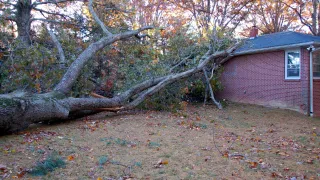
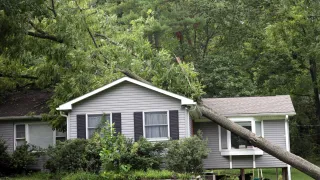
First things first: if you have limbs on power lines, trees on structures, or anything that looks immediately dangerous, please stay back and call for help. That's not the time to assess anything yourself.
But if the immediate crisis has passed and you're now trying to figure out what to do next, this guide is for you. Recovery after an ice storm isn't always straightforward, and it helps to take things one step at a time.
Start with Safety, Not Cleanup
It's tempting to get out there and start dragging branches to the curb. But before you touch anything, take a slow walk around your property and look for hazards that aren't obvious at first glance.
What to watch for:
Hanging branches that haven't fallen yet. These are sometimes called "widow makers" for a reason. Ice-damaged limbs can be cracked and unstable, waiting for a gust of wind — or a bump from a rake — to come down.
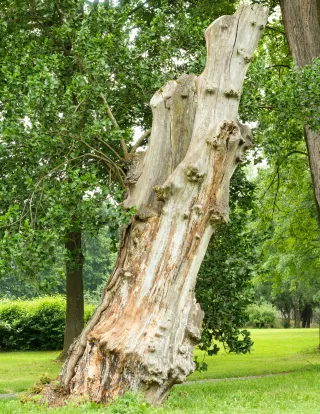
Leaning trees or trees with exposed roots. If the ground was saturated and then froze, root systems may have shifted. A tree that looks upright might not be stable.
Branches tangled in power lines or cable lines. Even if the power is back on, don't assume lines are safe. If anything is touching or dangling near a line, keep your distance and call the utility company.
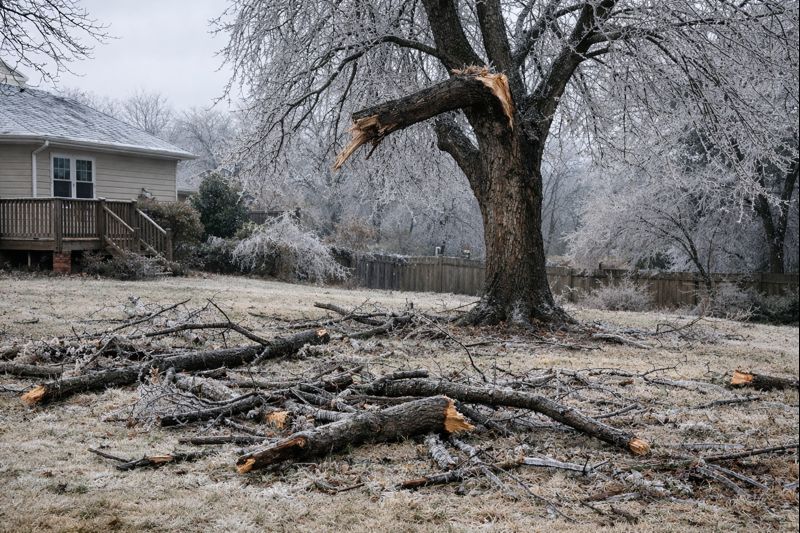
Damage that's hard to see from the ground. Cracks at branch unions, splits in the trunk, and broken tops often aren't visible until you're looking closely — or looking from above.
If you're not sure whether something is safe, it's okay to leave it alone for now. A few days of waiting won't make things worse, but grabbing the wrong branch could.
Document Everything Before You Touch It
If there's any chance you'll file an insurance claim, take photos before you start cleanup. This is easy to forget in the moment, but it matters.
What to photograph:
Wide shots showing the overall damage to your property
Close-ups of specific damage — broken limbs, fallen trees, impact points on structures
Any damage to your house, roof, fence, shed, deck, or vehicles
The trees themselves, showing where breaks occurred
Take more photos than you think you need. It's much easier to document now than to try to explain what things looked like after the debris is gone.
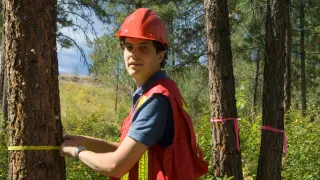
Also, if you have trees that came down or were seriously damaged, write down what species they were and roughly how large — diameter and height if you can estimate. Insurance adjusters sometimes ask for this information.
What You Can Handle Yourself (And What You Shouldn't)
Some cleanup is fine to do on your own. Some really isn't.
Generally safe for homeowners:
Small branches and twigs scattered on the ground
Debris that's already down and not tangled in anything
Raking up leaves and ice-damaged foliage once things have thawed
Call a professional for:
Anything involving a chainsaw, especially if you don't use one regularly
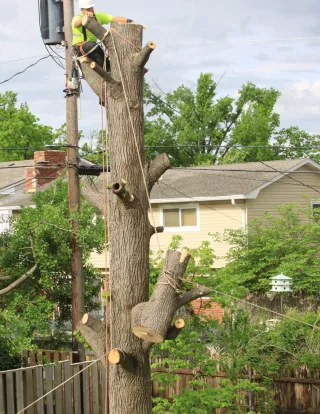
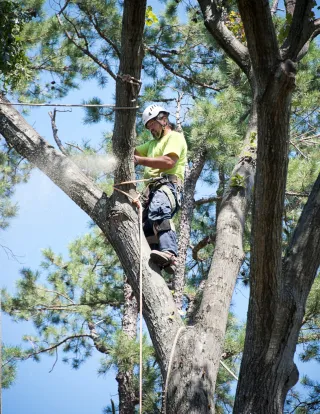
Limbs that are hung up in other branches or caught in the canopy
Leaning trees or trees with visible root damage
Any branch larger than you can comfortably carry
Work that requires a ladder (this is where a lot of injuries happen)
Anything near power lines — even lines that look dead
I know it's frustrating to wait when your yard is a mess. But ice storm cleanup is one of the most dangerous times for DIY tree work. Branches are unpredictable, wood is slick, and it's easy to misjudge what's stable and what isn't.
Some Trees Will Recover — Some Won't
Here's the hard part: not every damaged tree needs to come down, but not every damaged tree will make it.
Signs a tree may recover:
Damage is limited to smaller branches (under 2-3 inches in diameter)
The main trunk and major limbs are intact
Less than 25-30% of the canopy was lost
The tree was healthy going into the storm
Signs a tree may not recover — or may not be safe to keep:
Major limbs split or torn from the trunk
Cracks or splits in the main trunk
More than 50% of the canopy is gone
The tree was already stressed, diseased, or in decline
Visible damage to the root plate or significant leaning
If you're not sure which category your trees fall into, it's worth having someone take a look. Some trees that look terrible right now will bounce back fine with proper pruning. Others that don't look too bad might have hidden damage that makes them unsafe long-term.
Recovery Happens Over Time
Ice storm recovery isn't a one-weekend project. The cleanup might take a few days, but truly understanding how your trees fared can take months.
Here's what to expect:
In the next few weeks: Focus on safety and debris removal. Get hazards addressed first; cosmetic cleanup can wait.
This spring: Watch how your trees leaf out. Delayed budding, sparse canopy, or dieback in certain sections can indicate damage you couldn't see in winter.
This summer: Keep an eye on trees that took heavy damage. Stress from ice storms can show up as unusual leaf drop, pest problems, or fungal issues months later.
If you had significant damage, it's not a bad idea to schedule a follow-up assessment in late spring to see how things are recovering.
A Note About Storm Chasers
After big storms, you'll sometimes see out-of-town crews going door to door offering quick tree work. Some are legitimate contractors helping with overflow. Some aren't.
A few things to keep in mind:
Get any estimate in writing before work starts
Be cautious of anyone who wants full payment upfront
If a price sounds too good to be true, it usually is
Taking a few extra days to vet a company is worth it. Shoddy storm work can leave you with bigger problems — and no recourse if the crew has already moved on to the next town.
We're Here if You Need a Hand
If you're looking at your yard and feeling overwhelmed, that's understandable. Ice storms leave a mess, and it's hard to know where to start.
We're happy to come out and walk through what you're dealing with — no charge for the estimate, no pressure to move forward until you're ready. Sometimes just having a professional set of eyes helps you figure out what's urgent, what can wait, and what might actually be fine.
Give us a call or text at (423) 443-4533. We'll help you make sense of it.