Clearing a Site for a Shop, Barn, or New Build: What to Expect
How much has to come out? What happens to the stumps? Where does all of it go?
Those questions tend to show up the first time you stand on the spot where the shop, the barn, or the new house is supposed to sit. It's trees, brush, and saplings, grown up thick enough that you can't tell where the corners would go. Then comes a fourth question. Where does clearing stop and the builder's work begin?
Early fall is a good time to line up a winter or spring build, and clearing land for a building site comes first. Here's what to expect, and what's worth knowing before anyone starts cutting.
Start With Where the Building Will Sit
Clearing land for a building site follows the plan, not the other way around. So the most useful thing you can bring to the estimate is whatever you know about the build.
That might be a drawing from the builder. It might be four stakes in the ground and a rough idea. Either one helps. When David walks the site with you, it's worth telling him:
- Where the building goes, and roughly how big it is
- How the drive comes in, and where trucks will need to turn around
- Where power will run from the road or the house
- How much working room the builder wants around the footprint
- Which trees you'd like to keep, if any
Say you've got two wooded acres and a shop planned near the back. If the drive, the shop, and the room around it are marked before anything is cut, the clearing gets quoted to that. If they aren't, it's easy to clear too little and need a second trip, or clear more than you meant to. A cut tree can't be put back.
Nothing has to be decided yet. David can walk it with you and help you think it through. But the more of the plan you have, the closer the quote is to the job.
Clearing the Building Area, and Keeping the Trees You Want
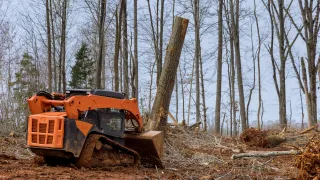
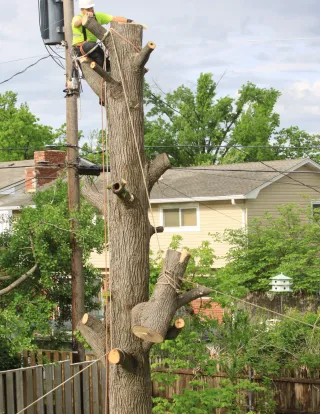
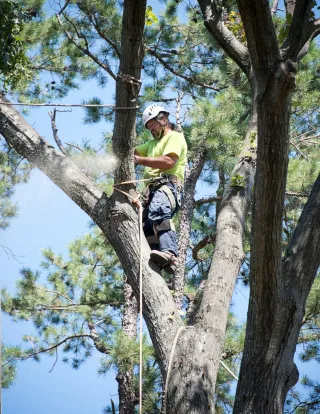
Inside the area you've marked, the brush, undergrowth, and saplings all go. Trees inside it come down whole if there's room to drop them, and in sections if there isn't.
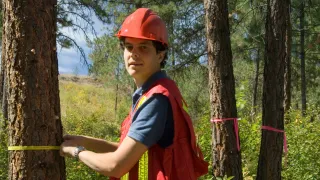
What stays is up to you, and it's settled before anything is cut. Maybe it's a shade tree near the house, or a stand of hardwoods between the shop and the road.
If you're keeping trees close to the build, it helps to know what construction does to them. The International Society of Arboriculture lists the big ones:
- Roots get cut or buried. Grading, trenching, paving, and adding or removing soil within a tree's root zone all damage roots.
- The ground gets packed down. Heavy construction equipment compacts the soil, which slows root growth.
- Trees in a stand lean on each other. Closely spaced trees grow as a community. Take some out, and the ones left can suffer sunscald or structural failure.
ISA also notes that the damage can take years to show. So a tree that looks fine the day the building is finished isn't always in the clear. That's worth raising with your builder while the plan can still change.
The Stumps Where the Building Goes
The stumps can be ground out as part of the clearing, or left where you'd rather. Stump grinding goes as far down as you want, and as far as the grinder can safely reach. If you want the spot filled back in with dirt afterward, that can be done too.
A stump at the far edge of the property is a different question from one where the slab will be poured. For anything inside the footprint, ask your builder what they need there. Then tell David.
What Happens to the Brush and Logs From a Building Site
A few trees make one pile. A building site makes many.
The usual answer is the trailer. We load it up and haul it away. Some people would rather part of it stay, out in the woods at the back or as wood they want to keep, and that's worth saying before work starts. We agree on where everything goes before anything leaves the site, and the quote includes it.
For more on reading a quote like this one, we've written about what a land clearing estimate should include.
Where Clearing Ends and the Builder's Work Begins
Clearing gets the brush, the trees, and the stumps out of the way. That's the part we do.
What the ground needs after that depends on what you're building. A pole barn, a shop on a slab, and a house each start differently, and your builder will know what theirs needs. When David comes out, he can talk through the next steps with you, so you know what's included in the clearing and what isn't.
Permits come up here too. We'll help you understand what the project involves before work begins, including permits when they're required, and we'll help you navigate the permit process. What applies depends on where your property sits and what you're planning. If a permit is required, you'll know about it before anything starts.
Running Power Out to the Shop
If the shop or barn needs power, getting it across open ground means a trench. Trenching is its own job, and we can quote it. Your electrician says where the line runs and how deep it needs to be. We dig to that, and they run the line.
Before any ground is opened, the utility locate gets called. On the Georgia side that's Georgia 811. On the Tennessee side it's Tennessee 811.
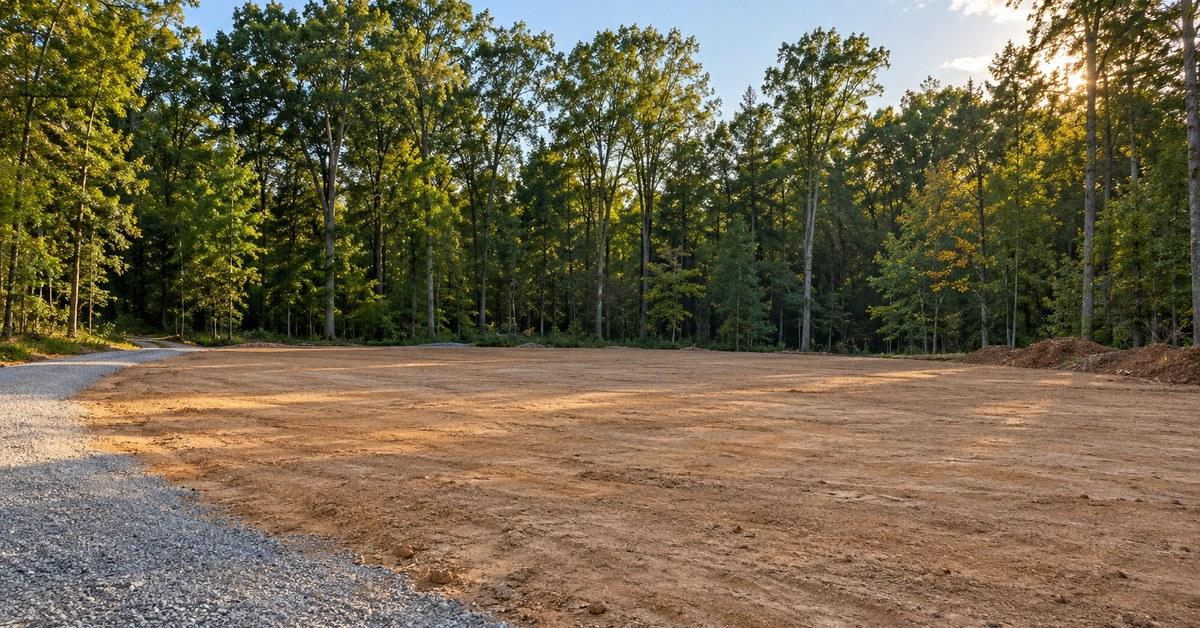
And if you'd like a gravel drive or a place to park once the site is cleared, mention it while David is out there. Gravel, river rock, and stone at the small-to-medium end are work we do too.
Why Fall Is a Good Time to Clear
We clear year-round. But if the build is planned for winter or spring, clearing now means the site is ready when the builder is. Nobody's waiting on anybody.
Before the First Tree Comes Down on Your Building Site
Four stakes in the ground is plenty to start from. Show us where they are and tell us what your builder has said so far. We'll walk it with you and quote the land clearing to match.
Once the price is in front of you, you'll know which part of the job is ours and which part is the builder's.
Estimates are free. Call or text (423) 443-4533, or request a quote online.
Sources
- International Society of Arboriculture (TreesAreGood.org), "Avoiding Tree Damage During Construction": https://www.treesaregood.org/Portals/0/TreesAreGood_Avoid%20Damage%20During%20Construction_0721.pdf
- Georgia 811, before you dig: https://www.georgia811.com/
- Tennessee 811, before you dig: https://www.tenn811.com/