Why Dead Trees Are More Dangerous in Summer Than Any Other Time of Year
The Tree That Looks Fine Until It Doesn’t
Here’s something that surprises a lot of people: summer is actually the most dangerous season for tree failures. Not winter ice storms. Not spring floods. Summer — when everything looks green and full and alive.
The reason comes down to one thing: leaves.
A tree in full summer leaf is carrying a lot of weight and catching a lot of wind. Most of the time, that’s fine — the tree is designed for it. But a dead tree carrying that same wind load is a different situation entirely.
The Sail Effect
When a summer storm rolls through, a tree’s full canopy acts like a sail on a boat — it catches the wind and transfers force down through the trunk and into the root system. A healthy living tree is flexible; it bends, distributes that load, and moves with the storm.
A dead tree has lost most of that flexibility. The wood becomes brittle as it dries out. Internal decay accelerates through the summer heat. And all of that force from the canopy — which may still have some leaves attached, or may be holding up dead branches heavy with absorbed moisture from rain — has nowhere to go except into a structure that’s getting weaker by the week.
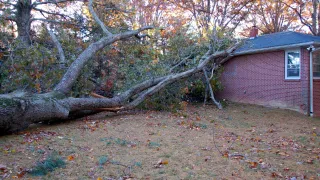
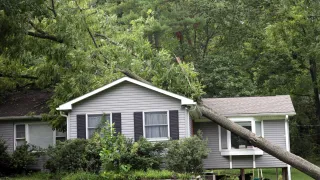
Tree professionals see more failures pulling trees off houses in summer than in any other season. The combination of full canopy wind resistance and degraded structural integrity is a genuinely dangerous one.
Dead Trees Keep Decaying — Faster in Summer
Here’s what’s happening inside a dead tree you may not be able to see from the outside:
Wood decay accelerates in heat and humidity. The fungi and insects that break down dead wood work faster in warm, moist conditions — exactly what we have in Chattanooga from June through September. A tree that seemed reasonably solid in March may have lost significant structural strength by August.
Insects move in. Carpenter ants, termites, and wood-boring beetles are more active in summer, and a dead tree is an ideal home. These insects tunnel through the wood in ways that aren’t visible from the outside, creating internal weakness that doesn’t show until failure.
The damage is hidden. This is the unsettling part. A dead tree can look stable from a distance — still standing, maybe with some leaves still clinging on — while the interior has deteriorated significantly. There’s no way to know how much structural integrity remains without getting closer.
How to Spot a Dead or Dying Tree in Summer
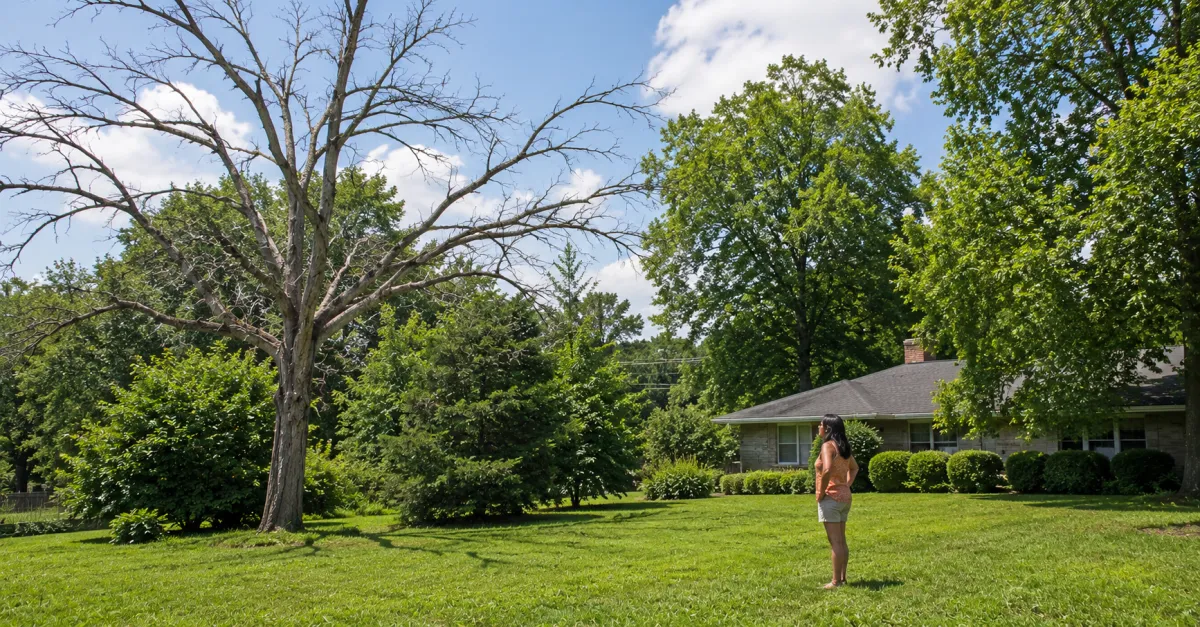
In winter, a dead tree is easy to spot — no leaves when everything else leafs out. In summer, it takes a little more attention.
Bare branches in a full-canopy season — if a tree or significant portions of a tree have no leaves when neighbors are fully leafed out, that’s a clear sign.
Leaves that are brown, shriveled, or wrong-colored — not the same as heat stress, which usually affects the edges and tips. A dying tree may have leaves that never fully developed or that died mid-season.
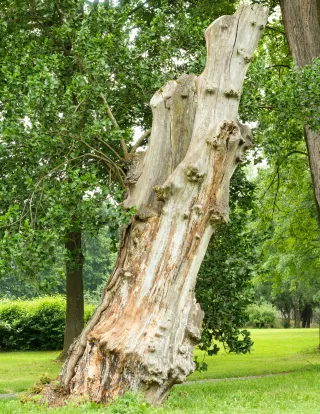
Peeling or missing bark — bark separation from the trunk is a sign of dead cambium tissue underneath.
Fungal growth — mushrooms or shelf fungus at the base or on the trunk. We’ve got a whole separate article on this, but fungal growth is almost always a sign of internal decay.
A hollow or soft-sounding trunk — tap the trunk with your knuckle. A healthy tree sounds solid. A hollow thud suggests internal decay.
Woodpecker activity — woodpeckers go where the insects are. Heavy woodpecker activity on a tree is often a sign that insects have already taken up residence in dead wood.
The Proximity Question
A dead tree in the back corner of a large property where nothing is nearby is a different situation than a dead tree near your home, your car, a neighbor’s structure, or anywhere children play. Proximity to something that matters is the key variable in how urgently the tree needs to come down.
The closer the tree is to something valuable — and the more people move underneath it — the less time it makes sense to wait.
Why Waiting Makes It Worse
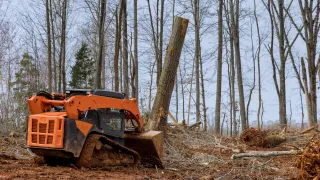
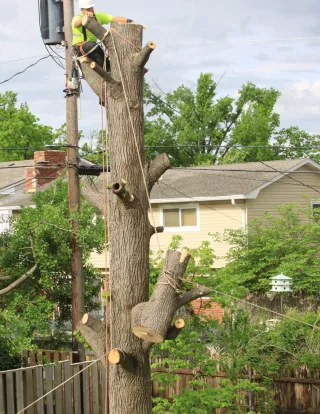
Removing a dead tree is a more complicated job than removing a healthy one. The wood is unpredictable. It doesn’t respond to cuts the way living wood does. Bark may separate unexpectedly. Limbs can fall during removal in ways that require more careful rigging and planning.
The longer a dead tree stands, the more the wood deteriorates and the more complex the removal becomes. In some cases, waiting significantly through the summer means the job that could have been done in May requires extra equipment or planning by September.
Worth a Look
If you’ve got a tree you’re not sure about — one that looked a little rough coming out of spring, or one that’s been on your radar for a while — summer is a good time to get eyes on it. Not to panic about it, but to know what you’re working with.
Feel free to call or text us at (423) 443-4533 for an honest assessment. We’ll tell you what we see.