Did Your Trees Actually Make It Through Spring Storms Okay?
The Storm Passed. But Did the Tree?
After a rough storm comes through, most people do a quick walk of the yard — check for downed branches, make sure nothing landed on anything important — and then move on. Which is reasonable. But it can miss something.
Tree damage from storms isn’t always immediately visible. Roots can shift without obvious signs above ground. Cracks in the trunk can be subtle. A branch that’s still attached might have a structural fracture that won’t become obvious until the weight of summer growth finishes the job. The tree looks fine. And then one afternoon in August, it doesn’t.
If you came through a significant spring storm — and Chattanooga’s spring storms can be genuinely rough — it’s worth taking a more deliberate look at your trees before summer storm season hits again. Here’s what to check.
Start at the Base
Root damage is one of the hardest things to spot after a storm, but it’s also one of the most consequential. A tree with compromised roots can stand for weeks or months looking completely normal — and then come down in the next significant storm with almost no warning.
Look for:
Soil that looks raised or cracked in a ring around the tree base — this can indicate that roots shifted or broke underground during wind loading
A new lean that wasn’t there before the storm — even a subtle change in the tree’s angle can indicate root movement
Soft or spongy ground around the root zone — roots that have broken can leave voids in the soil
Exposed roots that weren’t visible before
If the root flare — the point where the trunk flares out to meet the ground — looks like it has shifted or lifted, that’s a meaningful warning sign.
Look at the Trunk
Work your way up the trunk slowly, looking for:
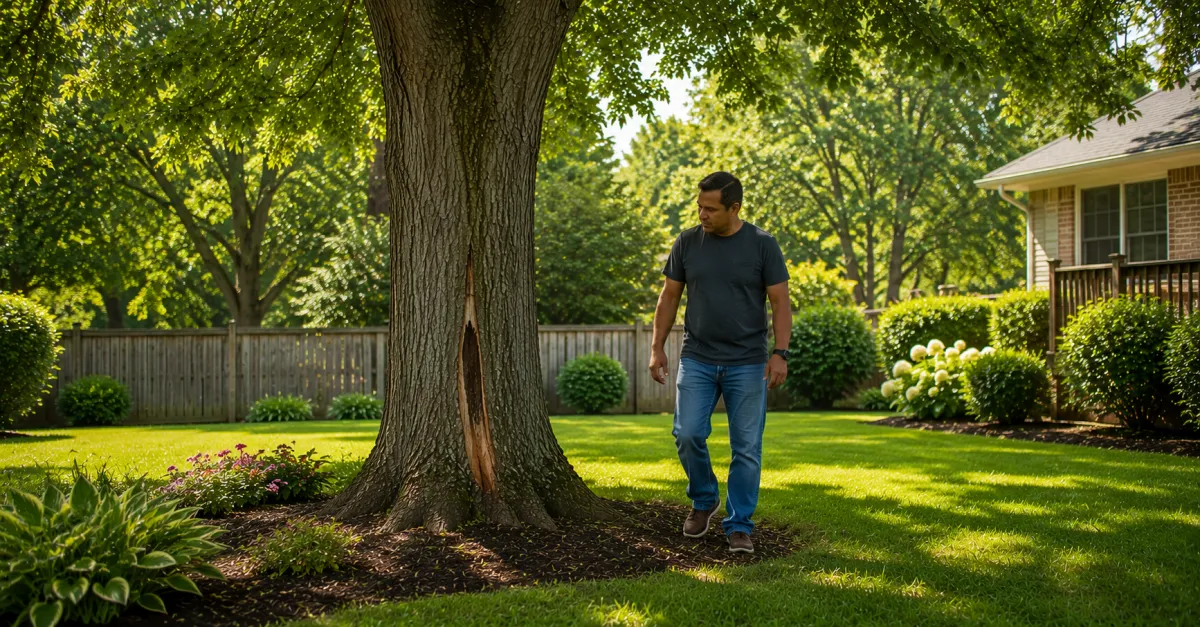
Vertical cracks or splits — these can be easy to miss on rough-barked trees and indicate internal stress fractures
Missing or torn bark — if more than a third of the bark is gone around the circumference at any point, that’s a serious wound
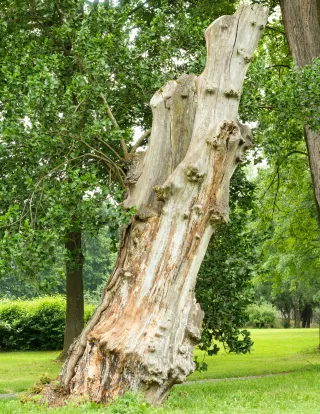
New cavities or hollow spots — storms sometimes expose decay that was hidden beneath bark
Fungal growth that wasn’t there before — fresh mushrooms or conks can indicate that decay, now exposed, has been colonized
Pitch or sap bleeding from unusual spots — can indicate internal cracking
Check the Canopy
In full summer leaf, the canopy can actually hide a lot. But look for:
Hanging or partially attached branches — still in the tree but no longer connected properly. These are called widow makers and are the most common cause of post-storm injury.
Branches that look like they’ve dropped lower than they used to be, or that are sagging in a way that’s new
Sections of the canopy that look thinner or less vigorous than the rest — could indicate a branch is failing to move water properly due to a hidden fracture
Bark wound at a branch union — where a branch meets the trunk, look for splitting or tearing that indicates the attachment point was stressed
The Tricky Part: It May Look Fine
This is the part that’s worth sitting with. A tree that’s been structurally compromised by a storm doesn’t necessarily look damaged from the outside. It may have full foliage, normal color, and nothing obviously wrong when you look at it from across the yard.
The indicators above are what to look for when you get closer. And some things — internal decay, root damage below the surface — aren’t visible at all without more specialized assessment tools.
If a tree is close to your home, over a frequently used area, or is a large specimen that would cause serious damage if it failed — and you went through a significant storm this spring — it’s reasonable to have someone take a closer look even if nothing jumps out at you.
What to Do If You’re Concerned
If something looks off, don’t leave it and hope it resolves. A tree in a compromised state heading into July and August — the most active part of storm season — is a different risk than that same tree would be in the fall after storms have passed.
If a branch is clearly hanging and over a space people use, that needs to come down promptly. If the whole picture is less clear, a professional look can tell you whether there’s something to act on or whether you can keep monitoring.
Give us a call or text at (423) 443-4533. We’re happy to come take a look and give you an honest read on what we see.