Spring Is Closer Than You Think: Getting Ahead of Storm Season Before It Starts
If you've lived in Chattanooga for any length of time, you know how fast the weather can shift in spring. One week it's 70 degrees and sunny, and the next you're watching a line of severe thunderstorms roll through the Tennessee Valley with wind gusts that make you rethink every tree in your yard.
That window — right now, in late February and into March — is actually one of the most useful times of year to pay attention to your trees. Not because anything is wrong necessarily, but because this is when you still have time to do something about it before the season gets moving.
Once spring storms start, the rhythm changes. Tree services get busy fast. Scheduling gets harder. And the jobs that could have been handled calmly on a weekday afternoon start turning into emergency calls on a Saturday night.
This post is about what to look for right now, why the timing matters, and how a little attention in the next few weeks can save you a lot of stress later.
Why Late February and March Is the Right Window
Most people think of spring as the time to react to trees — after something falls, after a storm causes damage, after a neighbor's tree lands in their yard. But the weeks just before spring growth kicks in are genuinely the best time to be proactive, for a few reasons.
Trees are still mostly dormant.
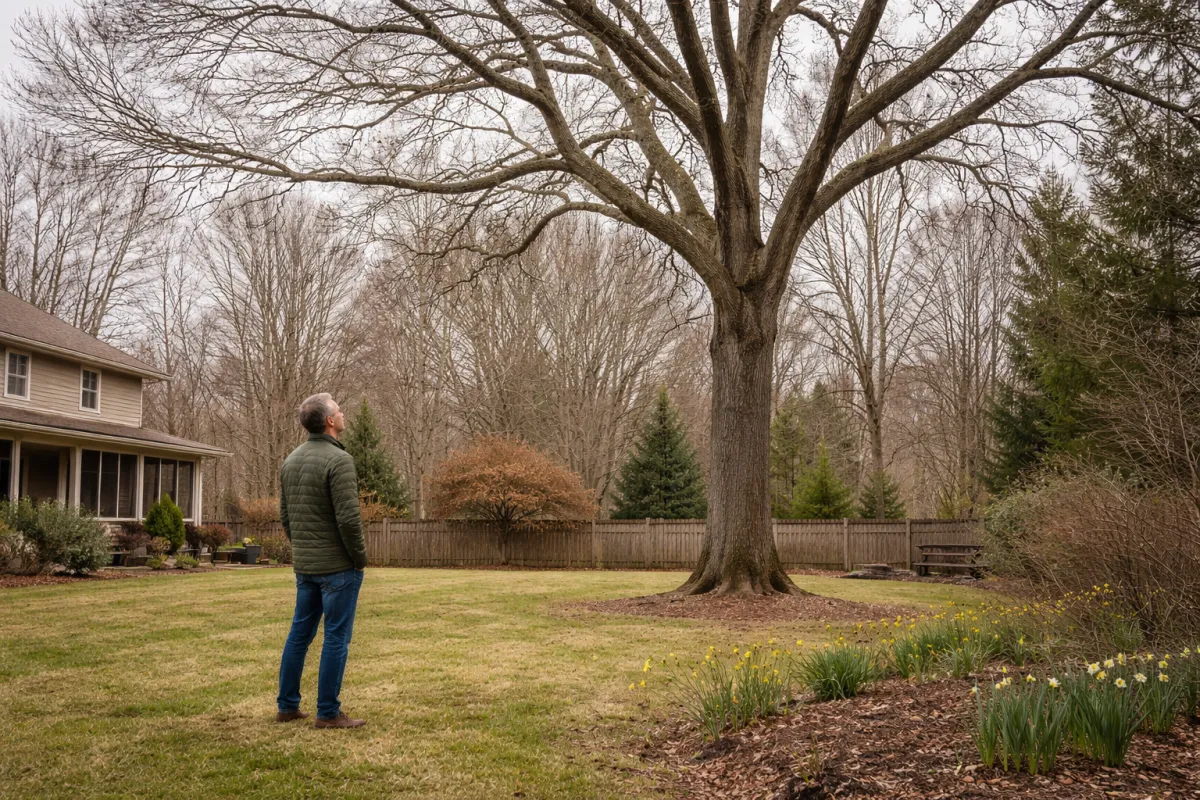
In Chattanooga, we don't get a hard freeze that locks everything down for months, but deciduous trees are still largely bare through most of February and into early March. That bare structure is actually easier to assess — you can see the full shape of the canopy, spot dead wood, identify structural problems and crossing branches that disappear into the foliage once everything leafs out.
It's before the busy season.
March through May is when tree services around here get slammed — storm cleanups, spring planting, homeowners who suddenly notice their trees look rough. Scheduling is easier right now, jobs often move faster, and you're not competing with a backlog of emergency work.
Problems caught now are easier to address.
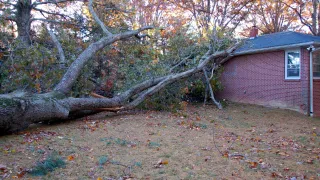
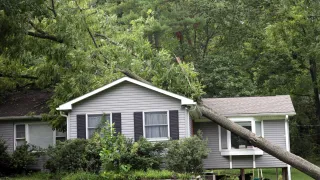
A dead limb hanging over your roof is a manageable pruning job in late February. That same limb after a March windstorm is a different situation entirely — potentially involving your roof, your insurance company, and a much more complicated cleanup.
What to Look for Right Now
You don't need any special knowledge to do a basic walk-around of your property. Here's what's worth paying attention to while trees are still bare or just starting to bud.
Dead wood in the canopy.
Dead branches are easier to spot now than at any other time of year. While surrounding branches are budding or still bare, dead wood often looks noticeably different — dryer, more brittle, sometimes with bark that's starting to peel or fall away. Look for branches that didn't produce any buds at all while neighboring branches are starting to show signs of life.
Hanging or partially broken limbs.
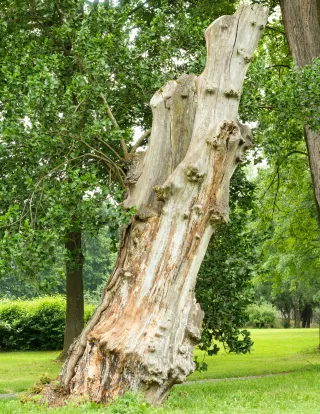
Sometimes called "widow makers" in the industry — these are limbs that broke at some point but didn't fall all the way. They're still up in the canopy, held in place by other branches or just by their own weight distribution. They look stable until they're not. Bare trees make these much easier to spot than they will be in a few weeks.
Limbs over your roof, driveway, or outdoor living areas.
It's worth looking at what's actually positioned above the parts of your property that matter. A limb that clears your roof by six feet in calm weather can come down onto it in a 50 mph gust. Look at what's overhead and think honestly about whether it should stay there.
Signs of decay at the trunk or major branches.
Soft or spongy spots in the bark, fungal growth near the base, cracks that run vertically along the trunk — these are worth noting and getting eyes on before storm season ramps up.
Trees that moved or leaned after recent weather.
We've had some ice and wind already this winter. If you noticed any trees that seemed to shift or if the ground near the base of a tree looks disturbed, that's worth a second look now that things have calmed down.
Crowded or crossing branches.
Branches that rub against each other create wounds over time that can become entry points for disease. A good pruning job before spring growth locks things in can address these before the tree puts energy into a structure that's working against itself.
The Specific Storms Worth Thinking About
Chattanooga's spring storm season is not subtle. The Tennessee Valley sits in a geographic position that funnels moisture up from the Gulf and collides it with cooler air coming down from the north, producing some genuinely significant severe weather between March and May.
We're talking about thunderstorms with sustained high winds, occasional tornadoes, and the kind of fast-moving squall lines that can go from clear sky to 60 mph gusts in under an hour.
Spring is also when we occasionally get late-season ice events — a warm week followed by a cold snap with freezing rain is not unusual in March, and ice loading on trees that have already started to leaf out is particularly hard on them.
None of this is meant to alarm — it's just the reality of where we live. Trees that are in good structural shape handle these storms reasonably well. Trees with dead wood, compromised structure, or root issues don't.
The Difference Between Proactive and Reactive
I've seen both sides of this plenty of times.
The proactive version looks like: a homeowner notices a dead limb over their back porch in late February, calls to schedule it, it gets handled on a calm afternoon before spring arrives, and that's the end of the story.
The reactive version looks like: that same limb comes down in a March storm, takes out a section of gutter, lands across the porch railing, and now there's an insurance conversation, a more complicated cleanup, and a repair bill in addition to the tree work.
The tree work cost is roughly the same in both scenarios. Everything else about the reactive version is worse — more stressful, more expensive overall, and less in your control.
Most of the people who call us for storm emergencies are good, attentive homeowners who just hadn't gotten around to it yet. That's not a criticism — it's just how these things tend to go when life is busy. But if this post gives you a reason to do a walk-around this week, it's probably worth the twenty minutes.
What to Do With What You Find
If you walk your property and everything looks fine — good. That's genuinely useful information and you can go into spring with more confidence.
If you notice something that concerns you and you're not sure what to make of it, a second opinion from someone who looks at trees every day isn't a big ask. A lot of what I get called out to look at turns out to be fine — and I'll tell you that plainly.
But occasionally something catches my eye that the homeowner had normalized over time, and those are the conversations worth having before a storm makes the decision for everyone.
If you find something clearly worth addressing — dead wood, a hanging limb, a structural issue — late February and early March is the right time to act on it. Schedules are more open, the work is cleaner while trees are dormant, and you're not racing against an incoming weather system.
We're Happy to Come Take a Look
If you want a set of eyes on your property before spring gets going, give us a call or text. We're in yards across the greater Chattanooga area and North Georgia regularly, and we can give you a straight read on what we see — what's worth addressing, what's fine to monitor, and what can wait.
No pressure, no upsell. Just an honest look.
(423) 443-4533 — call or text anytime.