How to Choose a Tree Service You Can Trust
Hiring someone to work on your trees isn't like hiring someone to mow your lawn. The stakes are higher. A bad decision can mean damage to your property, injuries, or a tree that's left worse off than before. And unlike a bad haircut, you can't just wait for it to grow back.
The tricky part is that it's hard to know what you're looking at when you're not in the industry. A truck with a logo and a guy with a chainsaw might be a skilled professional — or might be someone who bought equipment last week and is figuring things out as they go.
This isn't meant to scare you. Most tree service companies are honest, hardworking people who take pride in their work. But there are enough exceptions that it's worth knowing what to look for — and what should make you pause.
Why This Matters More Than You Might Think
Tree work is inherently dangerous. Heavy limbs, heights, chainsaws, proximity to houses and power lines — there's a lot that can go wrong if someone doesn't know what they're doing.
If an uninsured worker gets hurt on your property or a company damages your home, your neighbor's fence, or a utility line without proper coverage, you might be the one dealing with the fallout. And if someone does poor work on your trees — bad cuts, topping, unnecessary removal — you're stuck with the consequences for years.
Taking a little time to vet a company upfront can save you a lot of headaches down the road.
Make Sure Someone's Covered: Insurance Matters
Before you talk about price or scheduling, make sure the people doing the work are properly insured.
Liability insurance covers damage to your property — if a limb drops on your roof, if equipment tears up your lawn, if something goes wrong. Ask for a certificate of insurance and make sure it's current. A reputable company won't hesitate to provide this.
Tree service companies structure their teams differently. Some have W-2 employees and carry workers' compensation insurance. Others work with independent contractors who maintain their own insurance coverage. Both setups are legitimate — what matters is that the people on your property are covered. If you're unsure, it's okay to ask how their insurance works. A company that's doing things right will be happy to explain.
The red flag isn't which structure a company uses — it's a company that can't or won't show you proof that coverage exists. If someone dodges the insurance question or gets defensive, move on.
Red Flags to Watch For
Beyond insurance, there are some warning signs that suggest a company might not be the right choice:
Out-of-town crews pushing for work after a storm. After major storms, you'll sometimes see unfamiliar trucks and crews going door to door looking for business. Some are legitimate contractors helping with overflow. But others are "storm chasers" who do quick, often poor-quality work and move on before problems surface.
This is different from a local company that's already working in your neighborhood and stops to check if you're okay. Context matters — someone who lives and works in your community has a reputation to protect. Someone passing through doesn't.
They want full payment before any work begins. For standard tree removal or trimming, there's no reason to pay everything upfront. A deposit is reasonable for jobs that require purchasing materials ahead of time — like landscaping restoration that involves buying trees, shrubs, or bulk mulch. But if someone wants full payment before they've done anything, especially for straightforward tree work, that's a red flag.
The price is dramatically lower than other quotes. Everyone likes a good deal, but tree work has real costs — labor, equipment, insurance, disposal. If someone's price is way below everyone else's, ask yourself what they're cutting corners on.
They recommend topping your trees. Topping — cutting the main branches back to stubs — is outdated and harmful. It weakens trees, encourages unstable regrowth, and creates long-term problems. Any company that suggests topping as a solution doesn't understand proper tree care.
They pressure you to decide immediately. Legitimate companies understand that you might want to get multiple quotes or think it over. High-pressure tactics — "this price is only good today" or "I can fit you in right now but not later" — are a sign that someone is more interested in closing a sale than in earning your trust.
Green Flags: Signs You're in Good Hands
On the flip side, here are some things that suggest a company is worth your trust:
They're willing to answer questions. A good company isn't annoyed by questions — they expect them. They should be able to explain what they're recommending, why it's necessary, and what the alternatives are.
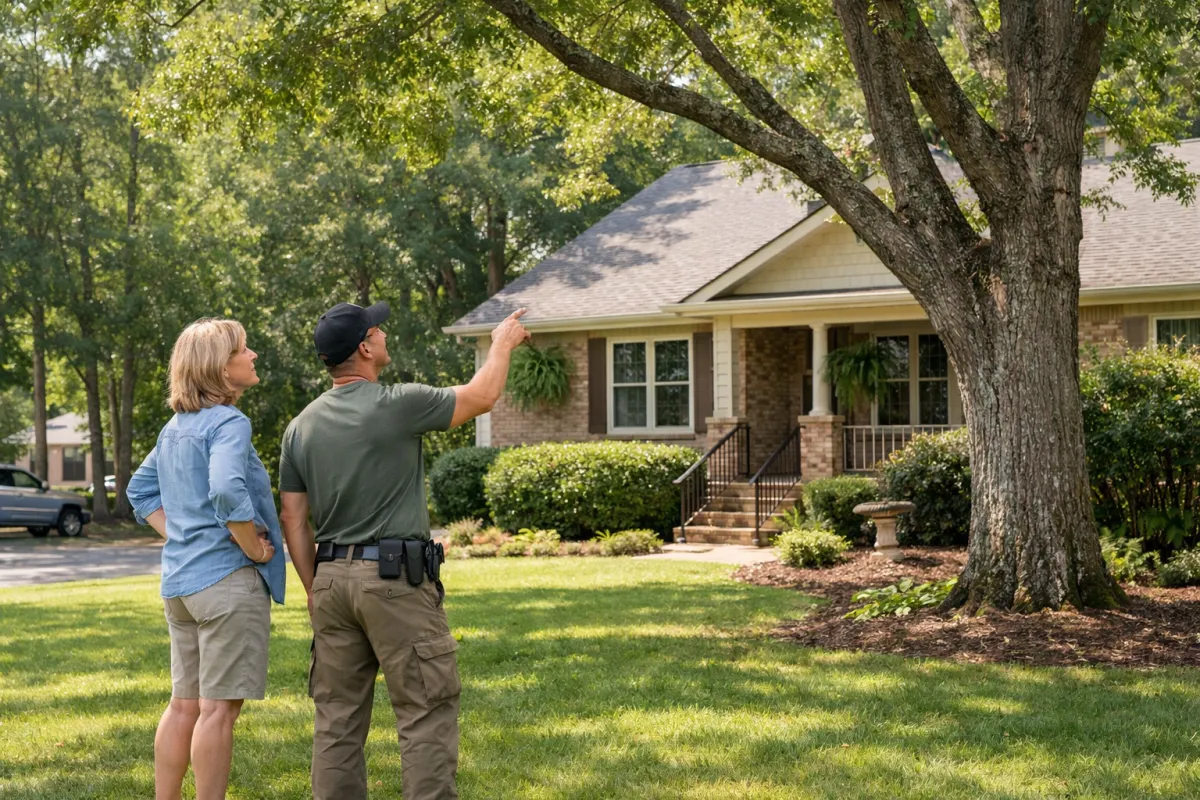
They do a thorough assessment. Someone who walks your property, looks at the trees carefully, and asks about your concerns is doing their job right. Someone who gives you a price from the driveway without getting out of the truck probably isn't.
They'll put it in writing if you ask. For smaller jobs, a verbal estimate and a handshake might be all you need — that's pretty common in this industry. But for larger or more complex work, it's reasonable to ask for a written estimate that includes what will be done, what it will cost, and any relevant details like cleanup and timeline. A trustworthy company will provide this without hesitation.
They have reviews and references. Online reviews aren't everything, but they're a useful data point. A company with a track record of satisfied customers is a safer bet than one with no history you can verify.
They're honest about what you need — and what you don't. Not every tree needs to come down. Not every branch needs to be trimmed. A trustworthy company will tell you if something can wait, if a tree might recover on its own, or if a less expensive option makes more sense.
They're part of the community. A company that's been working in your area for years has relationships and a reputation to maintain. They're not going to disappear after the job is done. That accountability matters.
Questions Worth Asking
When you're talking to a tree service, here are some questions that can help you get a sense of who you're dealing with:
Are you insured? Can I see proof of coverage?
How long have you been in business in this area?
Who will be doing the actual work?
What's included in the price? Is cleanup and debris removal part of it?
What's your approach to this particular job? Why are you recommending this?
What happens if there's damage to my property?
You don't need to interrogate anyone, but a company that's confident in their work will answer these questions without hesitation.
Trust Your Gut
At the end of the day, you're inviting someone onto your property to do work that requires skill, judgment, and care. Pay attention to how they communicate with you. Do they listen to your concerns? Do they explain things in a way that makes sense? Do they show up when they say they will?
If something feels off, it probably is. There are plenty of good tree services out there — you don't have to settle for one that doesn't feel right.
A Final Thought
I know this article might sound self-serving coming from a tree service company. But honestly, we'd rather you hire a trustworthy competitor than get burned by someone who shouldn't be in this business.
When homeowners have bad experiences, it makes everyone's job harder. It erodes trust. And it means people put off necessary work because they're worried about getting taken advantage of.
If you're looking for someone to take a look at your trees, we're always happy to come out and give you an honest assessment. No pressure, no gimmicks — just a straight answer about what you're dealing with and what it would take to address it.
Give us a call or text at (423) 443-4533. We'll earn your trust the old-fashioned way.