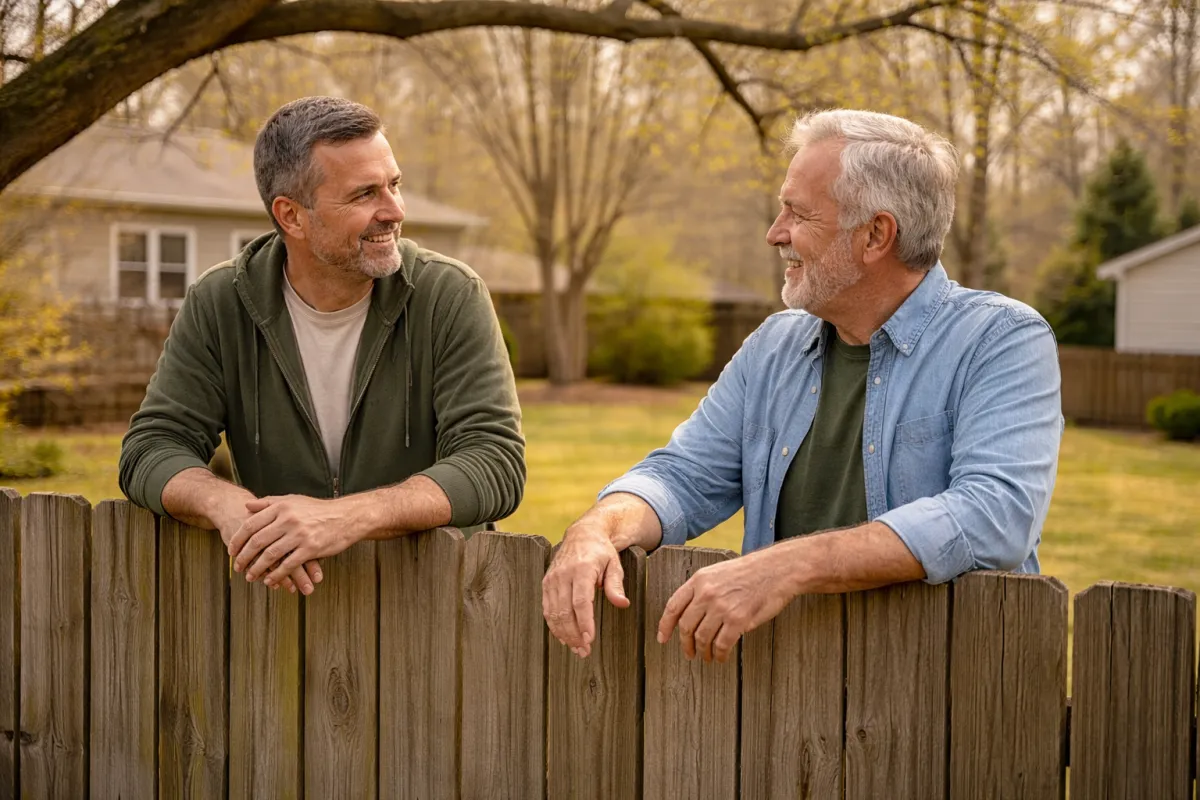
How to Talk to Your Neighbors About a Tree Problem
Most homeowner conversations are pretty straightforward. This one isn't.
Whether it's a dead limb hanging over your fence, a trunk that's clearly leaning toward your roof, or a tree that drops debris into your yard every storm — tree problems that involve a neighbor's property sit right at the intersection of practical concern and potential awkwardness. You don't want to damage the relationship. You also don't want to ignore something that genuinely worries you.
The good news is that most of these conversations go better than people expect — especially when they're handled with a little preparation and a lot of good faith. Here's how to approach it.
Start by Knowing What You're Actually Dealing With
Before you knock on the door, it helps to get clear on what you're seeing and why it concerns you.
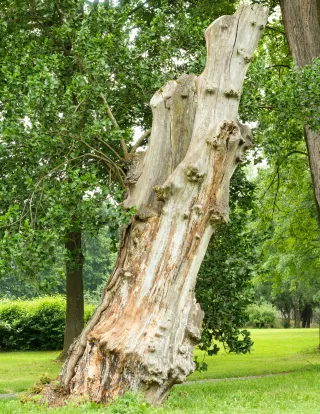
There's a difference between a healthy tree whose branches extend over your property line and a dead or declining tree that poses a real risk. The first is a normal part of living near trees — annoying sometimes, but not inherently dangerous. The second is worth a conversation regardless of whose yard it's in.
Ask yourself:
Is this a safety concern or an inconvenience? Dead wood, visible decay, a significant lean toward your home or your kids' play area — those are safety conversations. Leaf drop, some shade, minor overhang — those are more about preferences.
Is the problem getting worse? A limb that's been there for years and hasn't changed is different from one that's visibly declining over a single season.
Have you had a professional look at it? If you're genuinely concerned about a tree's health or structural integrity, getting an assessment before the conversation gives you something concrete to share rather than just a feeling.
Going in with specifics — "there's a large dead limb over my garage" — lands very differently than a vague "your tree is making me nervous."
Understand Where the Law Stands in Tennessee
You don't need to lead with this, and you definitely shouldn't open with it — but it helps to understand the basic framework before you have the conversation.
In Tennessee, you have the right to cut back any branches or vegetation that hang over onto your property, up to the property line — but not beyond it. That's your legal remedy for encroachment. However, encroaching trees are not considered a nuisance simply because they cast shade, drop leaves or fruit, or overhang — they may be regarded as a nuisance when they cause actual harm or pose an imminent danger of actual harm to adjoining property.
What does that mean practically? If your neighbor has a healthy tree whose branches extend over your fence, you can trim those branches back to your property line at your own expense. But you can't demand they remove the tree, and going onto their property to do the work yourself isn't allowed.
If you do trim overhanging branches, be careful not to damage the overall health of the neighbor's tree — trimming in a way that harms or kills it could expose you to liability.
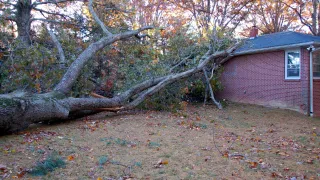
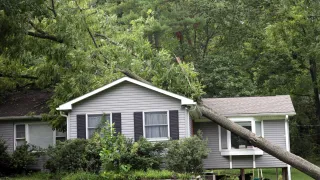
If the tree appears genuinely hazardous — not just inconvenient — and the neighbor has been made aware and done nothing, the legal picture shifts. But the goal here is to resolve things neighborly, long before anyone starts thinking about attorneys.
One more thing worth knowing: if a tree's trunk straddles the property line, it's considered a shared tree — meaning neither owner can remove it without the other's consent. That's a situation where communication isn't just nice to have, it's required.
How to Start the Conversation
Timing and tone matter more than most people realize.
Pick a low-stakes moment. Don't approach your neighbor when they're clearly busy, stressed, or in a rush. A casual moment — catching them outside on a weekend, or a quick text asking if they have a few minutes to chat — sets a better tone than showing up unannounced with a concern.
Lead with relationship, not the problem. A simple "Hey, I wanted to talk with you about something — nothing urgent, but I wanted to mention it before it became a bigger deal" communicates good faith from the start. You're not ambushing them. You're being a thoughtful neighbor.
Describe what you're seeing, not what you're demanding. There's a big difference between "I noticed there's a pretty significant dead limb hanging over my side of the fence — I wasn't sure if you'd had a chance to look at it" and "You need to take care of that tree." The first opens a conversation. The second puts them on the defensive.
Acknowledge the cost. Tree work isn't cheap, and your neighbor knows that. If you come in expecting them to cheerfully agree to a removal the same day, you're setting yourself up for friction. Acknowledging that you understand it's a project — "I know it's not a small thing" — goes a long way.
What If They're Resistant?
Not every neighbor is going to respond warmly. Some people get defensive. Some genuinely don't have the budget. Some just don't see the problem the way you do.
A few approaches that tend to help:
Offer to get a professional opinion together. If there's a disagreement about whether a tree is actually hazardous, suggesting that you both hear from someone who knows trees removes the "your word vs. mine" dynamic. It's harder to dismiss a concern when an independent professional shares it. It can also help your neighbor understand what they're dealing with in a way that doesn't feel like pressure from you.
Offer to share the cost. This one depends on your relationship and the situation, but if the tree genuinely threatens both properties, splitting the cost of removal or trimming is sometimes the most practical path forward.
Document what you've shared. If the conversation doesn't go anywhere and the situation is serious enough to warrant it, following up with a written note (even a friendly one) creates a record. This matters if the tree later causes damage and there's a question of whether the neighbor was made aware of the problem.
Give it some time. People sometimes need a few days to process a concern that feels inconvenient or expensive. A follow-up a week or two later — friendly, not pressuring — often lands better than the first conversation.
When You're the One Being Approached
This situation runs both ways. If a neighbor comes to you about one of your trees, the way you receive that conversation sets the tone for everything that follows.
Try to listen without getting defensive. Even if you don't immediately share their concern, take a look. Consider getting a professional opinion. A neighbor who feels heard is a lot less likely to escalate things than one who feels dismissed.
Being known as someone who handles these things thoughtfully is worth a lot — both for the relationship and for your own peace of mind.
A Note on Getting Help
If you've had the conversation and both you and your neighbor want to move forward — or if you'd like a professional assessment to share before you even bring it up — I'm glad to help with either.
I've walked through situations like this with homeowners plenty of times. Sometimes the tree needs to come down. Sometimes it just needs a trim. Sometimes people are worried about something that turns out to be low risk. I'll tell you what I actually see, not what makes for the easiest sale.
If you'd like a second set of eyes before or after talking to your neighbor, feel free to reach out. Call or text (423) 443-4533 — I'm happy to take a look and give you something solid to go on.
Tree problems between neighbors don't have to turn into neighbor problems. A little preparation, a lot of good faith, and the right information usually goes a long way.