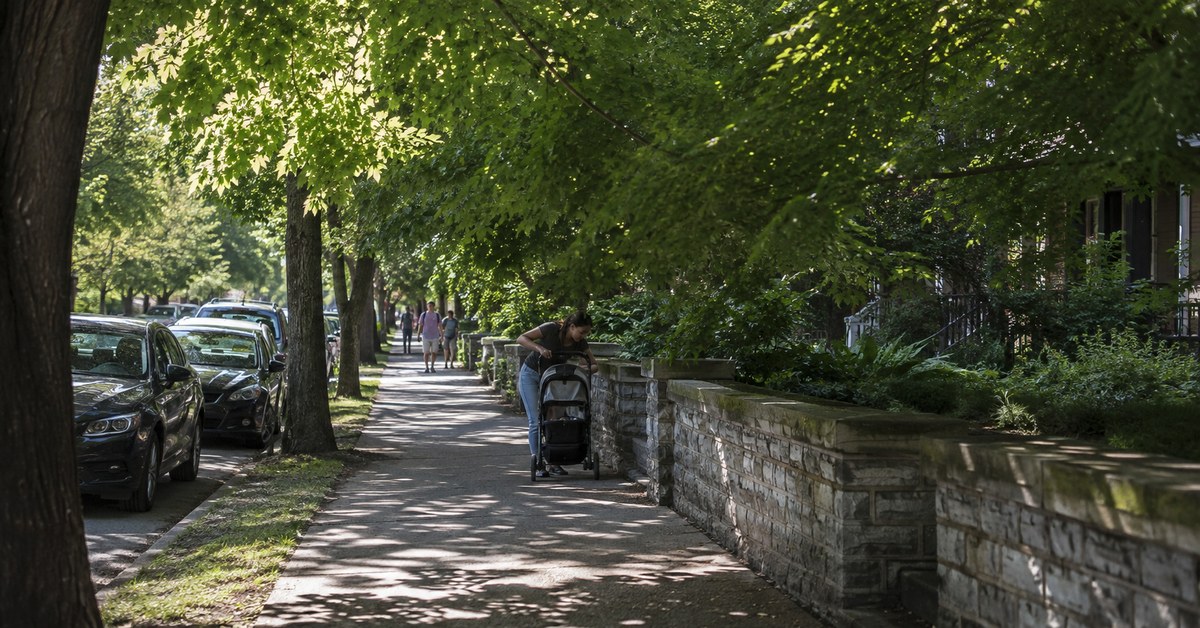
Low Hanging Limbs: What You're Expected to Keep Clear
There's a limb on almost every street in Chattanooga that everybody has quietly agreed to duck under.
You know the one. It's been getting lower for three summers. The mail carrier walks around it. You've stopped noticing it entirely because your body just does the little lean automatically now. And then the school buses start running again in August, or a moving truck comes down the street, and suddenly that limb is somebody's problem.
Low hanging limbs over sidewalks, streets, and driveways are one of the most common things we get called about this time of year, usually after something has already scraped. It's worth knowing what's actually expected of you, because most people are surprised to learn the tree in question is theirs even when the branch isn't over their property.
The Clearance Numbers Worth Knowing
There's a standard set of heights that most cities use, and Chattanooga is in line with the common ones:
- About 8 feet of vertical clearance over a sidewalk. Enough for a tall person, an umbrella, and somebody carrying something.
- About 14 feet over the street. Enough for delivery trucks, garbage trucks, and school buses.
Those are the general figures rather than something I'd want you to take as legal advice — municipalities word these things differently and requirements can vary by street classification. If you want the exact number for your address, the city can tell you, and it's a short phone call.
But as a practical rule of thumb, they're the right ballpark. If a person can touch the limb standing flat-footed on the sidewalk, it's low. If a box truck has to swing wide, it's low.
It's Your Tree Even When the Branch Isn't Over Your Yard
Here's the part that catches people off guard.
Ownership generally follows where the trunk is, not where the branches are. If the trunk is on your side of the property line, that tree is yours — including the third of it that's currently hanging over the public sidewalk, your neighbor's driveway, or the street.
That means maintaining clearance over the right-of-way in front of your house is typically the property owner's job, not the city's, even though the sidewalk itself is the city's. The city generally handles trees that are in the right-of-way — the ones planted between the sidewalk and the curb, for instance. Yours in the front yard, growing out over the walk, stays yours.
I mention this without any drama attached to it. It's not a gotcha. It's just the rule most people have never had a reason to learn.
The Things That Hit It Before You Notice
The reason low limbs matter more in the second half of August is that everything starts moving again.
- School buses are back on residential routes, and a bus roof is right at that 11 to 12 foot mark with mirrors sticking out further.
- Garbage and recycling trucks have arms and lifts that swing higher than the truck itself.
- Delivery vans run more frequently than they did ten years ago and drive closer to the curb.
- Mail carriers walking a route are the ones most likely to actually get scratched.
- Emergency vehicles need clearance too, and a fire truck's ladder and light bar sit high. That's the one worth thinking about seriously — not because it's likely, but because it's the day you'd most want the street clear.
None of that is meant to alarm anybody. It's just the honest list of what's moving under your tree that wasn't a month ago.
Your Own Driveway Counts
While you're looking at the street, look at your own driveway.
A limb that clears your sedan doesn't clear a moving truck, a delivery van backing in, a camper, or a friend's pickup with a rack on it. And if you've got a limb scraping the roof of your car every time you pull in, that's doing quiet damage to both — bark wounds on the tree, paint on the car.
The driveway one is easy to leave alone because it only bothers you occasionally. It's also the easiest to fix.
Why Everything Looks Lowest Right Now
This is the piece of it that's genuinely useful to understand.
Branches sag under weight, and a branch is at its absolute heaviest in late summer. It's carrying a full season of foliage, and every leaf is holding water. After a good soaking rain in August, limbs droop noticeably lower than they did in spring — sometimes by a foot or more on a long horizontal branch.
So a limb that had comfortable clearance in March genuinely may not have it now. You're not imagining it, and the tree isn't collapsing. It's loaded.
That's also why judging clearance in winter is misleading. If you look at a bare tree in February and think "that's fine," check it again in August with the leaves on and wet. That's the real number.
About Liability, Without the Scare Tactics
I'm not going to tell you the sky is falling here, because it usually isn't.
But the general principle in most places is that responsibility tends to follow knowledge. A limb that comes down in a freak event is one thing. A limb that's been visibly dead or visibly low for two years, that a neighbor mentioned, that finally hits something — that's a harder position to be in.
Which means the useful takeaway isn't "panic," it's "don't ignore the one you already know about." If you've noticed it, you've noticed it. The fix is usually straightforward and inexpensive compared to almost any version of the alternative.
If you're genuinely unsure where you stand, your homeowner's insurance agent can tell you more about how your specific policy treats it than I can.
How to Raise a Canopy Without Hurting the Tree
Clearing low limbs is called crown raising, and it's one of the more commonly botched pruning jobs because it looks simple.
A few things that matter:
- Don't take too much at once. Removing a large share of a canopy's living branches in one season stresses the tree. Spreading it over two seasons is often the better call on a big removal.
- Lower branches are working branches. They feed the trunk and help it taper and thicken. Stripping every limb off the bottom 20 feet gives you a lollipop — a tall skinny trunk with a heavy crown on top, which is structurally worse in wind, not better.
- Cut in the right place. Cuts go just outside the branch collar, the slightly swollen ring where the limb meets the trunk. Flush cuts and stubs both give decay an entry point.
- Don't top the tree as a shortcut to getting height off the street. Topping produces weak, fast, upright regrowth that becomes a worse hazard in a few years than what you started with.
- Think about the shape you'll live with. Raising a canopy changes how a tree looks from the street permanently. Worth deciding on purpose rather than by accident.
The Short Version
Walk to the end of your driveway sometime this week and look back at your own trees from the street, the way a delivery driver would see them. Then walk the sidewalk in front of your house and notice whether you're ducking.
That five-minute walk catches almost everything in this article.
If you find something that needs raising and you'd rather not guess at how much to take, we're glad to come look and give you a straight answer — including "that's fine, leave it alone," which is genuinely the answer sometimes. Estimates are free, including that one. Call or text (423) 443-4533.