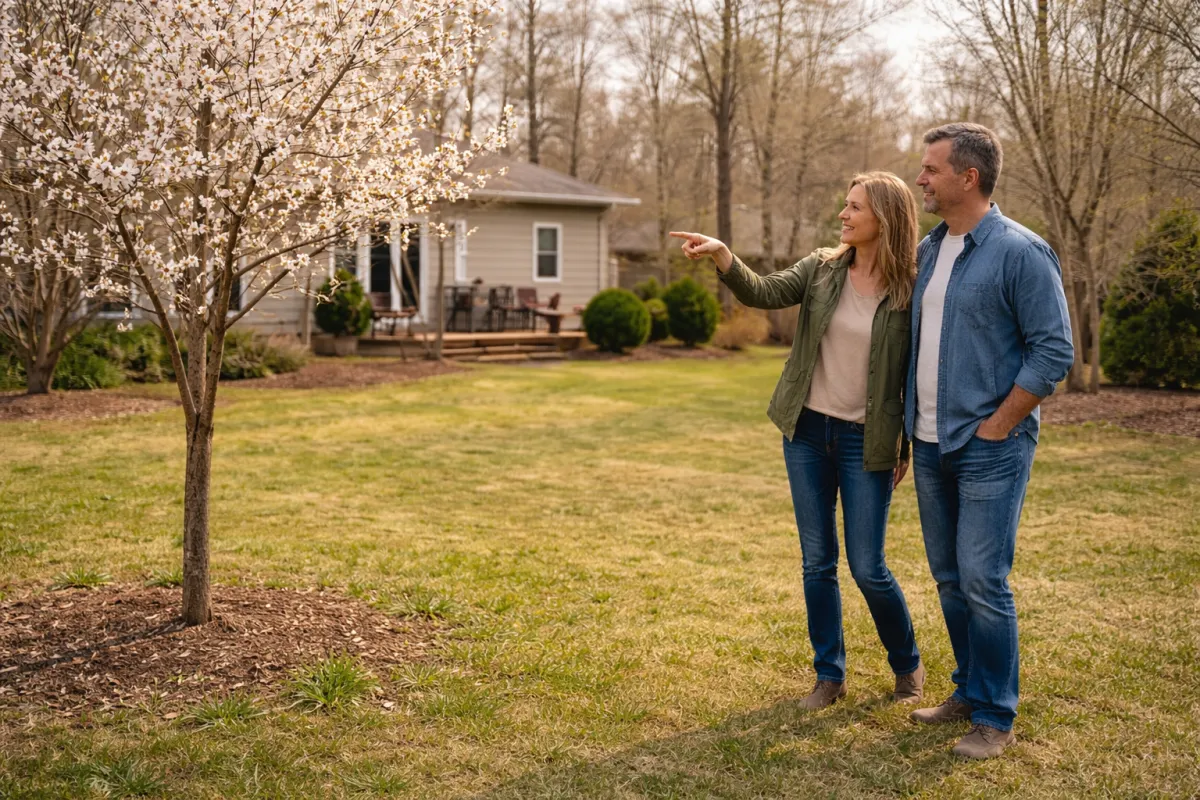
Native Trees Worth Planting in Chattanooga (And Why It Matters)
Spring has a way of making you want to add something to your yard. Maybe you had a tree come down recently. Maybe there's a bare spot that's been bothering you. Or maybe you've just been thinking it would be nice to have more shade, more color, or more life out there.
If that's where you are, here's a thought worth sitting with: the trees that do best in this area — the ones that ask the least from you and give the most back — are the ones that already belong here.
Native trees aren't a trendy gardening concept. They're just trees that evolved alongside this particular soil, these particular weather patterns, and the insects and birds that share this region with us. That history matters more than most people realize when it comes to how a tree performs in your yard over the long haul.
Why Native Trees Are Worth Choosing
Before getting into specific trees, it's worth understanding what you're actually getting when you plant native.
They're adapted to what Chattanooga actually does. Our summers are hot and humid. We get ice storms in winter. Spring brings heavy rain and saturated soil. Native trees have spent centuries here — they're not surprised by any of that. Non-native ornamentals often struggle with our humidity, our clay soils, or our swings between wet springs and dry summers.
They need less intervention. Because they've co-evolved with the local ecosystem, most native trees are naturally resistant to the pests and diseases common to this region. You're not going to be fighting the same losing battles you might with a tree that doesn't belong here.
They support the food web in ways non-natives can't. This sounds like an ecology lecture, but there's a practical side to it: native trees feed the caterpillars and insects that birds depend on to raise their young. A yard with healthy native trees tends to have more birds, more pollinators, and more life in general. Non-native species — even beautiful ones — often can't provide that same ecological value because the local wildlife hasn't evolved to use them.
They tend to be lower maintenance over time. Once established, most natives are largely self-sufficient. Less watering, less spraying, less worrying.
Trees Worth Considering for the Chattanooga Area
These are some of the best native options for homeowners in our region — trees that are well-suited to residential yards and have a lot to offer.
Eastern Redbud (Cercis canadensis)
If you've driven around Chattanooga in early March, you've already noticed this tree. It blooms before its leaves come in — small, vivid pink-purple flowers that cover the branches. It's genuinely one of the most striking things that happens in a Chattanooga yard every spring.
Redbuds are understory trees, meaning they don't get enormous — typically 20 to 30 feet tall. That makes them a great choice for smaller yards or spots near the house where you don't want a towering canopy. They adapt well to a wide range of soils, tolerate partial shade, and once established, they're pretty easygoing.
They're also one of the earlier blooming trees in the region, which makes them valuable for pollinators coming out of winter.
Flowering Dogwood (Cornus florida)
The dogwood is practically synonymous with spring in the Southeast, and for good reason. White or pale pink blooms in April, glossy leaves through summer, and bright red berries in fall that birds love. It's genuinely a four-season tree in terms of visual interest.
Dogwoods are another understory tree — they max out around 25 to 30 feet — so they fit well in most residential landscapes. They prefer partial shade and moist, well-drained soil. In the Chattanooga area, they're right at home.
One thing to know: dogwoods can be susceptible to a fungal disease called dogwood anthracnose, especially in shady, moist spots. Planting them in a location with good air circulation and morning sun reduces that risk significantly.
Tulip Poplar (Liriodendron tulipifera)
This is Tennessee's state tree, and it earns it. Tulip poplars grow fast and grow tall — 60 to 90 feet at maturity — and they produce distinctive tulip-shaped flowers with yellow petals and an orange center every spring. In fall, the leaves turn a clean bright yellow before dropping.
This is a tree for people who have the space for it and want to make an impact. It's a genuine shade tree. It's also nearly pest and disease-free, tolerates clay soils, and is one of the more resilient options you can plant in this region.
A note on placement: because these trees get large, they need some distance from structures, power lines, and the house. If you're thinking about a tulip poplar, it's worth a conversation about where exactly to put it so it has room to do what it does.
White Oak (Quercus alba)
Oaks are the workhorses of native tree planting — and white oak is one of the best. It's a long-lived, wide-canopied shade tree that supports an extraordinary range of wildlife. Acorns feed deer, turkey, squirrels, and dozens of bird species. The tree itself hosts a huge variety of native insects, which in turn feed songbirds.
White oaks are slow growing, which some people see as a drawback. The flip side is that they're building strong, resilient wood as they go — the kind of tree that's still standing 200 years from now. If you're planting for the long view, there aren't many better choices.
They do best in full sun and well-drained soil and need room to spread — mature white oaks can reach 80 feet tall and equally wide.
Blackgum (Nyssa sylvatica)
Blackgum doesn't get as much attention as it deserves. It's a medium-sized native tree — typically 30 to 50 feet — with glossy green leaves that turn some of the most vivid red and orange of any tree in our region in the fall. It often colors earlier than other trees, making it a real standout in September and October.
The small blue-black fruits feed birds, and the flowers are a valuable nectar source for bees. Blackgum adapts well to different soil moisture levels, which makes it versatile — it grows in both upland yards and spots that stay a little wetter.
If fall color is something you care about, blackgum is hard to beat.
River Birch (Betula nigra)
River birch has a distinctive look — peeling, multi-toned bark in cream, salmon, and cinnamon tones — that adds texture and visual interest year-round, even in winter when everything else is bare. It's a fast grower and does especially well in spots that stay moist or have drainage challenges.
If you have a low area of the yard that tends to hold water after rain, river birch is one of the more practical choices you can make. It's comfortable there, which means it'll establish faster and grow stronger than most alternatives.
It's a medium to large tree — 40 to 70 feet — so it needs some space, but it's also one of the more adaptable native options for challenging yard conditions.
A Few Things to Keep in Mind
Right tree, right place. The most important decision you'll make is where the tree goes, not just which tree you choose. Think about the mature size, nearby structures, underground utilities, and how the spot drains. A tree planted in the wrong spot creates problems down the road — for the tree and for you.
Give it a real start. Even native trees need some attention in the first year or two while they're establishing roots. Mulching well around the base (keeping it away from the trunk itself), watering during dry spells in that first season, and not compacting the soil around the root zone makes a real difference in how quickly a tree gets established.
Spring is a great time to plant — the soil is warm enough to encourage root growth, temperatures haven't hit summer heat yet, and rainfall generally helps with establishment. If you've been thinking about adding a tree, the next few weeks are a good window.
Want a Second Opinion Before You Plant?
If you're not sure which tree makes sense for a particular spot — or you want to think through placement before you commit — I'm happy to take a look. Sometimes a quick conversation saves a lot of trouble later.
You can call or text (423) 443-4533 anytime. No pressure, just a straight answer about what might work best for your yard.
This is a good region for trees. We've got the climate, the rainfall, and the soil to grow some genuinely beautiful ones. Choosing native just means you're working with what already fits — and that tends to make everything easier from the start.