The Conversation Nobody Has With Their Tree Service (But Should)
Most people hire a tree service the same way they hire a lot of contractors — get a price, make sure they seem legit, and go from there. That's a reasonable starting point.
But there's a whole second layer of conversation that almost never happens, and it covers the stuff that actually affects how the job goes, how much it costs, and whether you end up with any surprises.
I've had enough of these conversations after the fact — when a homeowner is frustrated about something that could have been cleared up in ten minutes before the job started — that I think it's worth laying out what those questions actually are.
This isn't a checklist designed to make hiring a tree service feel like a legal deposition. It's just the stuff that genuinely matters and that most people don't think to ask until they're already in the middle of a situation.
What happens to the wood and debris when you're done?
This is probably the most commonly skipped question, and it leads to more after-the-job friction than almost anything else.
Different tree services handle this differently.
Some haul everything away as part of the job.
Some chip the brush and leave the larger wood rounds on-site.
Some will ask if you want firewood stacked, or if you'd prefer everything removed.
Some charge extra for full haul-away.
None of these approaches are wrong — but if you don't ask, you might come home to a pile of logs in your yard that you weren't expecting.
Before any job, get clear on exactly what "cleanup" means for that company.
Will they rake the area? Remove all wood, or just brush? Is haul-away included or an add-on? Getting aligned on this beforehand saves everyone the awkwardness of a post-job conversation.
Do you use climbers, a bucket truck, or both — and does it matter for my job?
Most homeowners have no idea there's a difference, and honestly, it doesn't matter for every job. But sometimes it matters a lot.
Bucket trucks are efficient for large, open-access trees. They work well when there's room to position the truck close to the tree and the job is relatively straightforward. For that type of work, they can be fast and cost-effective.
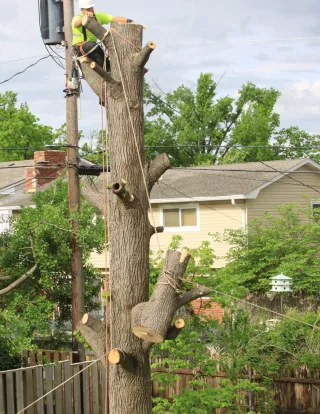
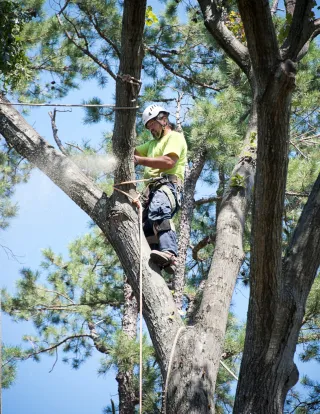
Climbers — specialists who physically ascend into the tree using ropes and rigging — can get to places a bucket truck simply can't. If your tree is in a tight backyard, behind a fence, close to your house, or in terrain that a heavy truck can't access without tearing up your yard, a climber is often the better — or only — option.
Climbers can also read a tree's structure more intimately as they work through it, which matters for complex pruning or removal jobs where judgment calls happen in real time.
Some companies rely almost exclusively on bucket trucks, which means certain jobs either don't get done the best way, or they're not taken on at all. It's worth asking how a company plans to approach your specific tree before assuming they have the flexibility to handle whatever the job requires.
What happens if something unexpected comes up mid-job?
Trees have a way of surprising people, even experienced crews. A trunk that looked solid from the ground might have decay further up.
A root system might be more entangled with a fence or foundation than expected. A large limb might need to come down differently than originally planned once the crew is up in the canopy.
The question isn't whether surprises will happen — it's how the company handles them when they do. Will they stop and call you? Make a judgment call and keep going? Adjust the scope and the price on the fly?
There's no universally right answer to this, but you want to know what to expect. A company that's in the habit of communicating during a job — especially when something changes — is one you'll feel better about when the unexpected shows up.
Ask how they typically handle it, and listen for whether the answer feels honest and considered.
Is your crew covered by insurance, and how does that work?
You've probably heard "make sure they're insured" more times than you can count. It's good advice, but it's worth understanding what you're actually asking about.
There are two main things that matter: general liability insurance, which covers damage to your property, and workers' compensation, which covers injuries to the people doing the work.
Not every company structures these the same way. Some carry full workers' comp on employees. Others work with independent contractors who carry their own coverage.
Either arrangement can be legitimate — what matters is that someone on that job is covered if something goes wrong, and that the coverage is current and verifiable.
Don't just take someone's word for it. Ask specifically about both types of coverage, and ask if you can see proof. A legitimate company won't hesitate to show you.
If insurance is involved, what does that process look like?
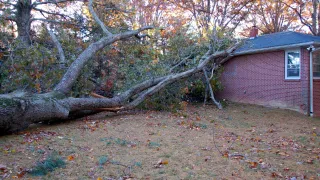
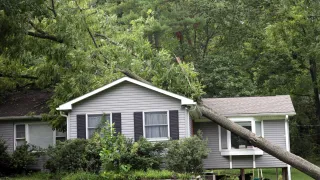
If a tree came down in a storm and hit your house or a structure, your homeowner's insurance may cover part of the work. But "may cover" is doing a lot of heavy lifting in that sentence.
What's typically covered, what's subject to your deductible, and what falls outside your policy depends on your specific coverage — and it varies more than most people realize.
What a tree service can do is document the damage thoroughly: photos, written descriptions, notes on the cause and condition of the tree. That documentation is genuinely useful when you're filing a claim.
What a tree service can't do is tell you what your insurance will pay. That's between you and your provider. If insurance is potentially in play, it's worth making that known upfront so the crew knows to document carefully — and so you can have a conversation with your insurer before any work begins, rather than after.
Will the city handle any of this?
This one comes up more than you'd expect, usually in the form of "I thought the city was going to take care of it."
Here's the short version: the City of Chattanooga handles trees on public property — street trees, trees in the right-of-way, debris that falls into a public street. For that, you can submit a request through the city's 311 system and their Urban Forestry program will respond.
What the city does not handle is tree work on private property. If a tree in your backyard needs to come down, or storm debris is sitting in your yard rather than the street, that's your responsibility to manage.
The city's brush collection program will pick up yard waste left at the curb on your scheduled collection week, but there are size limits — wood can't exceed eight feet in length or eighteen inches in diameter — so it's not a solution for a full tree removal.
Understanding this boundary beforehand helps you plan appropriately and avoid the frustration of waiting on help that isn't coming.
Do I need a permit, and who handles that?
For most residential tree work on private property in Chattanooga, you don't need a permit. But there are exceptions — trees near public rights-of-way or sidewalks, certain protected trees in designated areas, and situations involving utility lines all have their own rules.
If your tree is close to power lines, EPB (Electric Power Board of Chattanooga) handles clearance near energized lines — not private tree services working independently. Knowing this in advance can save you from scheduling work that can't safely proceed without utility coordination first.
A good tree service will know when permits or utility coordination are required and should flag it for you before the job starts, not partway through.
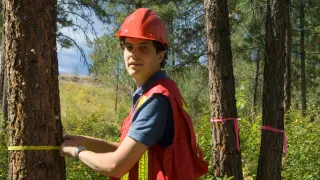
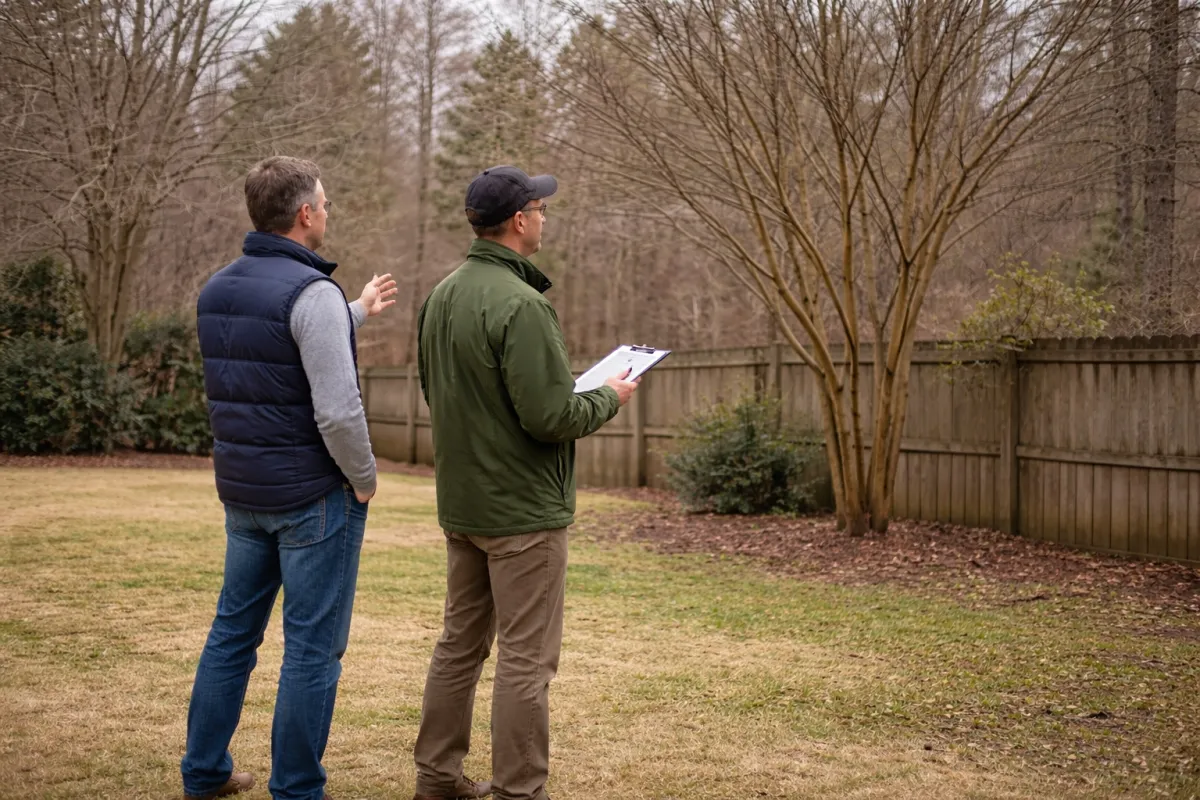
What's your honest read on this tree?
This one sounds simple, but it's probably the most valuable question on the list.
Not every tree that looks concerning needs to come down. Not every tree that looks fine is actually fine. And not every tree service will tell you the truth if the truth means a smaller job — or no job at all.
Ask for an honest assessment, not just a price. Ask what they'd do if this were their yard. Ask if there are options short of removal worth considering. The answer tells you a lot about how a company operates — whether they're in the business of doing right by you or just doing the next job.
I know this isn't a neutral thing for me to say, since I'm a tree service owner myself. But I'd rather you go into any conversation — with us or anyone else — knowing what to ask. The best outcome is that you end up working with someone you actually trust. That's better for everyone.
We're happy to talk through any of it
If you've got a tree situation and want a straight conversation before committing to anything, give us a call or a text. We'll tell you what we see, what we'd recommend, and where the limits of our honest opinion are.
(423) 443-4533 — call or text anytime.