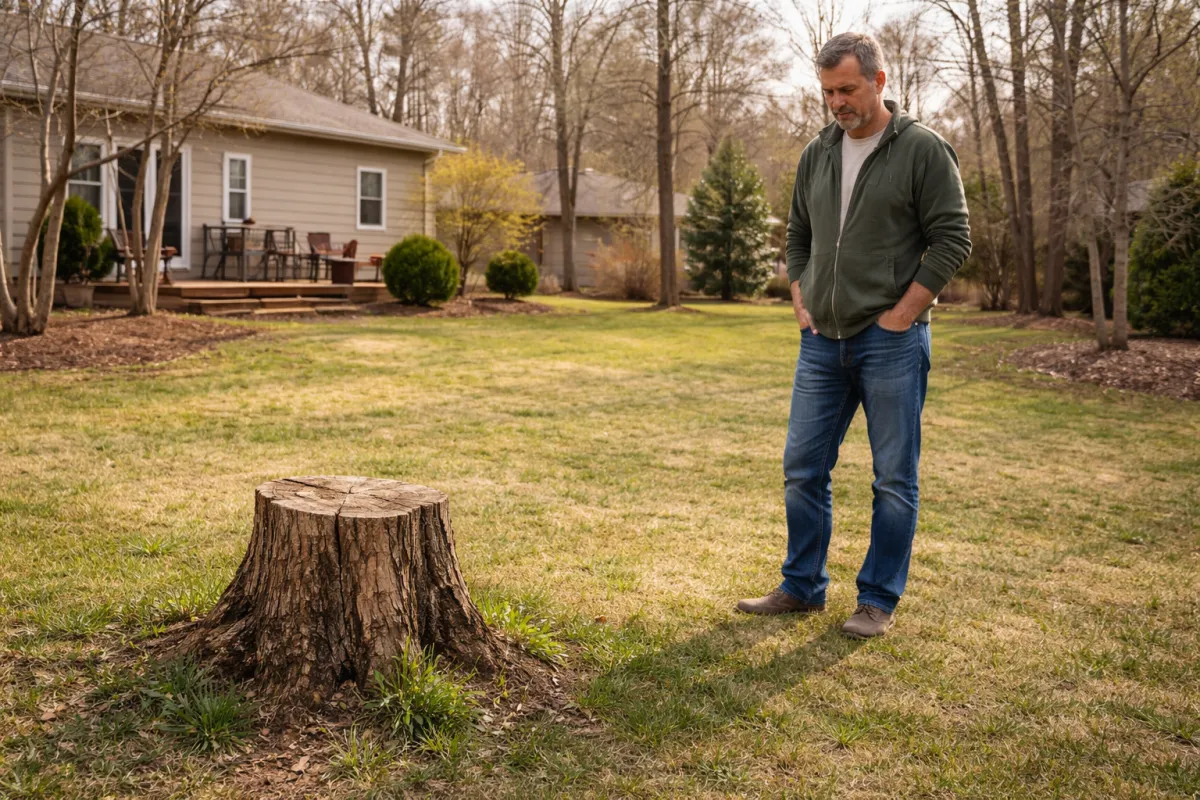
Why That Stump Is Still a Problem (Even If You've Forgotten About It)
There's probably a stump somewhere in your yard that you've just... made peace with.
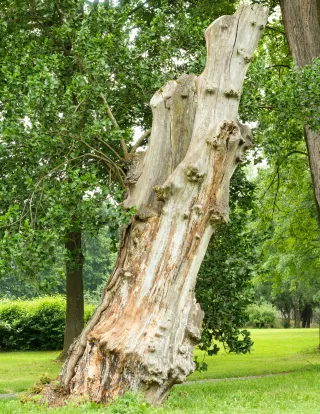
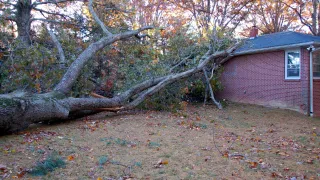
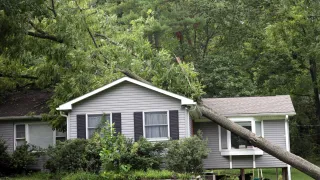
Maybe a tree came down a few years ago — storm damage, old age, a neighbor's complaint. The tree got removed, and at the time, dealing with the stump felt like a lower priority. So you mowed around it, maybe planted something nearby, and eventually stopped really seeing it.
It's still there, though. And quietly, it may be causing more trouble than it looks like.
This isn't a scare piece. Most stumps aren't emergencies. But if you've got one sitting on your property, there are a few practical reasons it's worth thinking about — especially as spring starts waking everything back up.
It Becomes a Welcome Mat for the Wrong Guests
Decaying wood is one of nature's best pest habitats. As a stump breaks down over the years, it gets soft, moist, and full of the exact conditions that wood-boring insects are looking for.
Carpenter ants, termites, and various beetles are common around old stumps in the Chattanooga area. The concern isn't just that they're in the stump — it's that stumps close to your home can act as a bridge. Insects establish themselves in the dead wood, and from there, your deck, your siding, or your crawl space may be the next stop.
If your stump is sitting within 10–15 feet of any structure, it's worth thinking about more seriously. The older and more decayed it is, the more attractive it becomes.
Regrowth Is More Common Than People Expect
Depending on the species, a stump that wasn't treated after removal can start sending up new growth — sometimes called sprouts or suckers. These aren't new trees exactly, but they're fed by the original root system, which means they can come back aggressively.
Some species, like Bradford pear and Chinese privet (both common here in North Georgia and the greater Chattanooga area), are especially stubborn about this. You cut them, they come back. Again. And again.
This kind of regrowth doesn't just look messy. It can redirect energy into multiple small stems instead of one managed tree, making the situation harder to resolve over time. The roots are still active underground — which brings up another issue.
The Root System Doesn't Just Stop
Even after a tree is removed, the roots continue to exist underground. They may be slowly decomposing, or they may still be alive if there's regrowth happening above ground.
As those roots break down, they leave voids in the soil. That's what causes the ground to settle unevenly in the years after a tree comes out. If a stump is near a driveway, walkway, patio, or foundation, that underground decomposition can eventually create soft spots and surface irregularities that are harder (and more expensive) to fix later.
This is one of those things that's easy to miss because it happens slowly. You're not going to notice it happening week to week — but years down the road, it can show up as a cracked patio, a heaved sidewalk, or a soft patch in your lawn that keeps coming back.
It Makes Mowing More Complicated Than It Needs to Be
This one sounds minor, but ask anyone who's been mowing around a stump for five years. It gets old.
You're routing your lawn mower around it every single time. You're probably leaving an awkward ring of uncut grass or weeds right around the base — because getting the mower right up to the stump without risking the blade isn't worth it. Over time, that spot becomes a little ecosystem of its own: grass, weeds, maybe some vines starting to creep up.
It also creates a tripping hazard. Low stumps are especially bad for this because they're easy to forget about. If you have kids running in the yard, or you entertain outside, or you're just moving around the property in low light, a stump at ankle height is the kind of thing you only notice once.
Spring Is a Good Time to Deal With It
As temperatures come up and the ground softens, early spring is actually a practical time to get stump grinding done. The yard is easier to work in before the full heat of summer, and if you're already thinking about landscaping or lawn improvements for the season, taking care of an old stump now opens up the space to do something intentional with it.
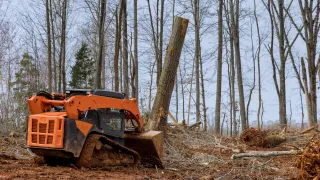
Stump grinding doesn't leave a hole — it grinds the stump down several inches below the surface and leaves behind wood chips that can be used as mulch or simply raked out and filled in. Most of the time, the area can be re-seeded or planted relatively soon after.
It's a fairly quick process, and it permanently eliminates the regrowth problem, the pest habitat, and the mowing headache in one visit.
No Pressure — But If You've Been Thinking About It...
If you've got a stump you've been meaning to deal with, or you're not sure whether it's something worth addressing, I'm happy to take a look. Sometimes people have a stump close to the house that really does need attention soon. Other times it's farther out in the yard and can wait. I'll give you a straight answer either way.
You can call or text (423) 443-4533 to set something up — no commitment required, just a conversation.
Spring is a good time to get ahead of things before the yard gets busy. If dealing with that stump has been on your mental list for a while, now's not a bad time to check it off.