Where the Wood Goes: Tree Removal Cleanup Explained
People ask a lot of good questions before they hire a tree service. How much, how long, are you insured, when can you start.
The question that gets forgotten almost every time is what happens to the tree afterward.
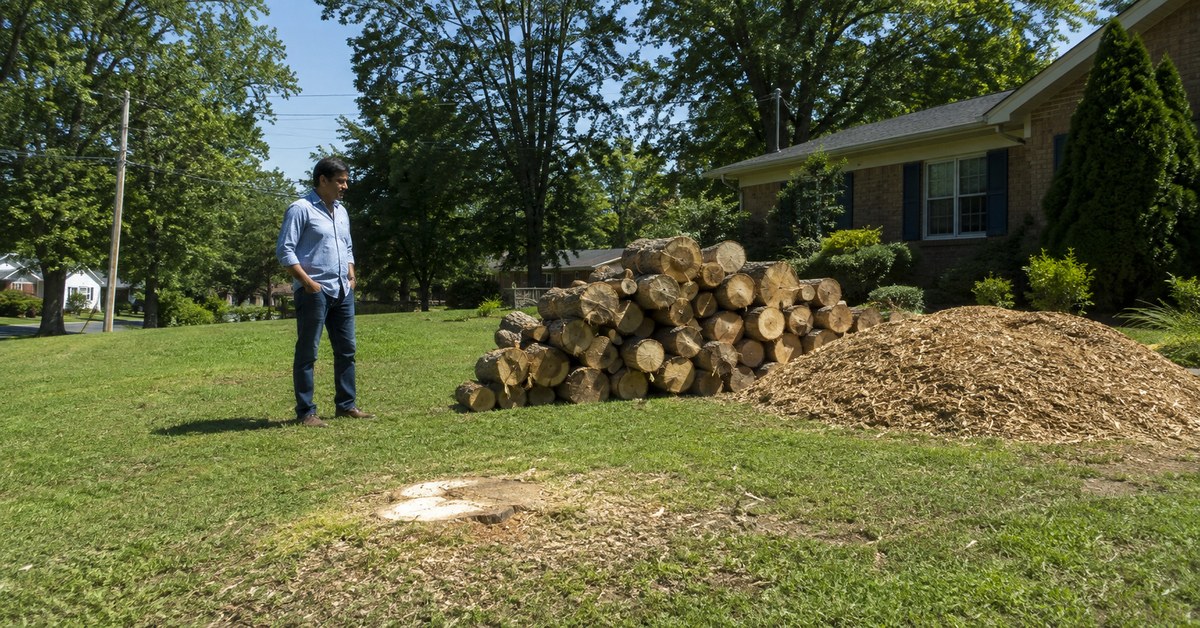
It sounds like a small detail right up until there's a pile of hardwood rounds the size of a car sitting in the middle of your yard and everybody's gone home. Tree removal cleanup is where a lot of the misunderstanding between homeowners and tree companies happens, and almost all of it is preventable with one conversation beforehand.
Here's what actually comes off a tree, where each part goes, and what to ask so nobody's surprised.
A Tree Is Far More Material Than It Looks Like
Standing up, a tree reads as one object. On the ground it's a volume problem.
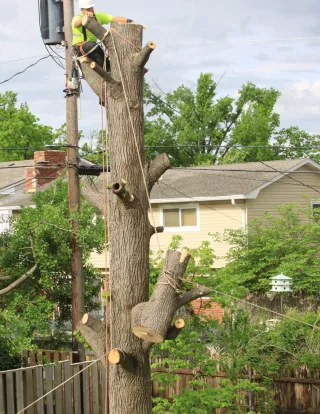
A mature oak or poplar in a Chattanooga yard can easily come apart into several tons of material — and it doesn't compact. Brush especially takes up an enormous amount of space relative to its weight. A canopy that looked perfectly reasonable in the air becomes a brush pile taller than your fence.
This is why removal pricing varies so much between quotes that sound like they're for the same job. Two companies can both be quoting honestly and land far apart because one is hauling everything away and one is leaving it stacked. Neither is wrong. They're different jobs.
The Three Piles
Everything that comes off a tree ends up in one of three categories, and they're handled differently.
- Brush and limbs — everything small enough to feed through a chipper. This becomes wood chips, and it's the highest-volume, most awkward material on site.
- The wood — the trunk and large limbs, cut into rounds. Heavy, dense, and the part people most often want to keep.
- The stump and grindings — what's left in the ground, and the mound of shredded material grinding produces.
When somebody says "full cleanup," it's worth knowing which of those three they mean, because it isn't always all of them.
What Full Cleanup Should Actually Include
A genuinely clean job means more than the big pieces being gone. Reasonable things to expect:
- Brush chipped and hauled, or stacked exactly where you agreed
- The lawn raked and the drive and walks blown off
- Sawdust cleared from the work area rather than left in the grass
- Ruts from equipment addressed, or at least discussed honestly before the work starts
- Anything the crew moved — furniture, planters, a grill — put back
That last category is worth a specific mention. Heavy equipment on soft ground leaves marks, especially after a wet week. An honest company tells you that up front rather than hoping you won't notice. If a yard is saturated, sometimes the right call is to wait a few days, and you should expect to hear that suggested rather than have your lawn torn up on schedule.
Keeping the Wood Is a Real Option
If you burn wood, ask about keeping the rounds. It genuinely can reduce what you pay, since hauling is labor and disposal cost, and it's a decent amount of firewood.
A few honest caveats before you say yes to a full load:
It has to be split and it has to season. Fresh-cut hardwood is heavy with water and won't burn well. Most of it needs somewhere between six months and a year stacked, split, off the ground, and covered on top to be ready. If you say yes to a full oak's worth of rounds and you don't own a splitter, you've accepted a very large project.
Don't take more than you'll actually use. Rounds you never get to become a home for insects and a chore you resent. It's completely reasonable to say "leave me a truckload and take the rest."
Ask what the tree died of. If a tree came down because of disease or a boring insect, keeping and stacking that wood next to your other trees isn't a great idea. And the general guidance on firewood in this region is to burn it where it was cut rather than hauling it somewhere else — moving firewood is how several destructive pests have spread, and Tennessee has dealt with exactly that. If you're getting wood from a job, keep it on that property.
Where you stack it matters. Not against the house, not against the foundation, and up off the dirt.
The Chips Are Useful, With Limits
Chipped brush makes a lot of mulch, and most companies will happily leave it rather than pay to dispose of it. Free mulch is a genuinely good deal.
Just know what you've got. Fresh chips are not the same as aged bark mulch from a bag. They're perfectly good on paths, natural areas, and around established trees, where they suppress weeds and hold moisture. They're less ideal worked into a vegetable bed, since fresh wood ties up nitrogen as it breaks down.
And the same rule applies as with any mulch: keep it off the trunk. A ring of mulch piled against the bark holds moisture right where you don't want it and invites rot at the base. A few inches deep, pulled back from the trunk, spread wide rather than mounded.
If the tree came out because of disease, ask before spreading its chips around the rest of your landscape.
The Stump and What It Leaves Behind
Stump grinding is usually a separate line item, and it's worth asking two specific things.
How deep? "Ground" can mean flush with the soil or it can mean 8 to 12 inches below grade. If you intend to replant in that spot or run a mower over it, you want the deeper version. Flush is fine if you just don't want to look at it.
What happens to the hole and the grindings? Grinding a big stump produces a surprising volume of shredded wood and soil — usually a mound noticeably bigger than the stump was. Some companies leave that mound for you to spread. Some haul it. Some backfill the hole with it, which is fine to level the ground but will settle over the next year and isn't good soil for planting something new.
Also worth knowing: grinding takes out the stump, not the root system. The larger roots stay in the ground and decompose over years. That's normal and usually fine, but it does mean the ground in that area may settle and that planting a new tree in the exact same spot is harder than it looks.
Questions Worth Asking Before You Sign Anything
Short list. Run it every time, with anybody.
- Is haul-off included in this price, or is the wood staying?
- If it's staying, where exactly are you stacking it, and cut to what length?
- Are the chips going or staying, and where do you want them?
- Is stump grinding included? To what depth?
- Do the grindings get hauled, spread, or left in a pile?
- Who handles ruts or lawn damage if the ground is soft?
- What happens if it rains — do we reschedule, and does that change the price?
None of those are confrontational questions. Any company that does this work regularly has answered all seven a hundred times and will have quick answers. If the answers get vague, that's information too.
The Point of All This
A tree removal isn't really finished when the tree is down. It's finished when your yard looks like a yard again.
Getting there smoothly is mostly a matter of both people agreeing beforehand on what "cleaned up" means, because that phrase carries very different pictures in different heads. I'd rather over-explain it in the driveway than have somebody standing in their yard afterward feeling like they got less than they thought they were paying for.
If you're weighing a removal and want a straight answer on what stays, what goes, and what it actually costs either way, give us a call or text at (423) 443-4533. Estimates are free, and we're happy to walk the property with you and be specific about every one of those seven questions before you decide anything.