Those Webs in Your Trees: What They Actually Mean
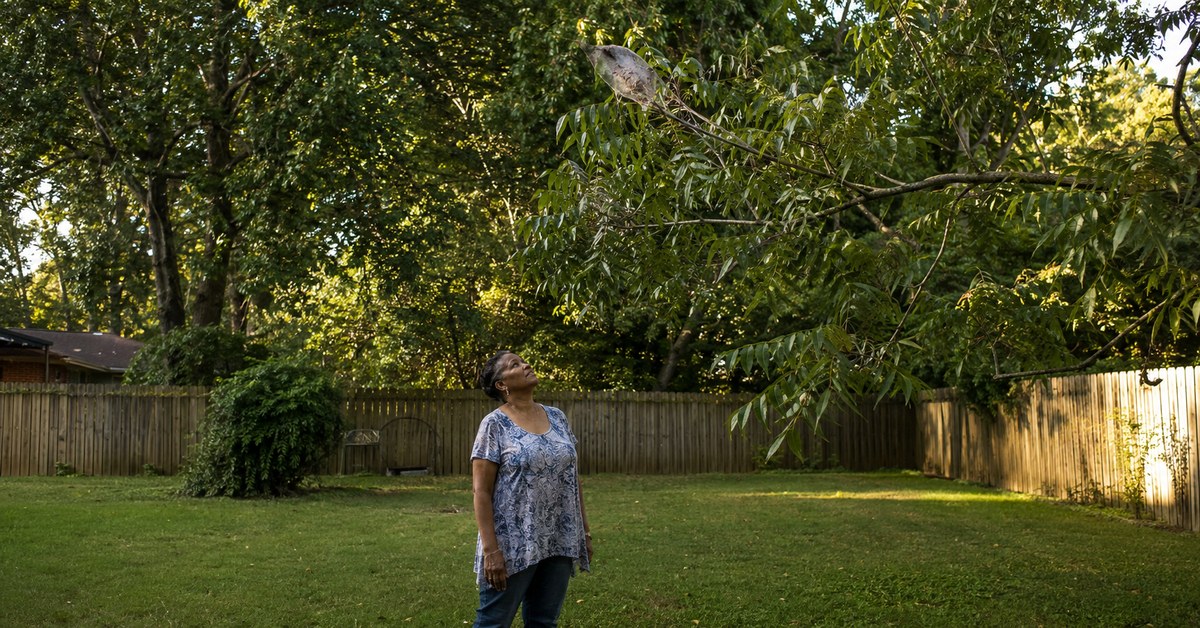
You walk out to get the mail sometime in August, glance up, and there it is — a gauzy gray web wrapped around the end of a branch like someone left a wad of cotton candy in your pecan tree. By next week there are three of them. By the end of the month the ends of those branches look chewed to the stem.
It looks bad. It looks like something is eating your tree alive.
Most of the time, it isn't. Those webs in your trees are almost always fall webworm, and while they're ugly, they're rarely the emergency people assume they are. But there are a few situations where they're worth paying attention to — and there's one lookalike that genuinely can kill a plant. Here's how to tell the difference and what's actually worth doing about it.
What You're Actually Looking At
Fall webworm is a native caterpillar that shows up around here in mid-to-late summer, and in our climate we often get two rounds of them in a single season. The moths lay eggs on the underside of leaves, the caterpillars hatch, and they immediately start spinning silk around the leaves they're eating.
The key detail is where the web sits. Fall webworm builds at the tips of branches and then expands the web outward as it runs out of food inside. That's why the webs seem to grow week over week — the caterpillars are enlarging their own tent to reach fresh leaves rather than crawling around exposed.
They're not picky. Around Chattanooga and North Georgia they hit pecan, hickory, walnut, persimmon, sourwood, cherry, and river birch especially hard. If you've got a big old hickory at the edge of the yard, you've probably hosted a few.
Why It Looks Worse Than It Is
Here's the part that surprises people: by August, a healthy mature tree has already done most of its work for the year.
Trees spend the spring and early summer photosynthesizing and banking energy for the winter. By the time webworm shows up, that account is largely funded. Losing some leaves in late August is a very different thing than losing them in May — the tree is already heading toward dormancy anyway.
So on a big, established, otherwise healthy shade tree, heavy webworm is mostly a cosmetic problem. It's genuinely unattractive. It's not usually a threat to the tree's life.
I say that carefully, though, because "mostly" is doing real work in that sentence. There are exceptions, and they're below.
How to Tell Webworm From Something You Should Worry About
Three things get confused constantly. Knowing which one you have tells you whether to shrug or act.
- Fall webworm — webs at the ends of branches, late summer, on hardwoods. Ugly, usually harmless to a mature tree.
- Eastern tent caterpillar — webs in the crotches where branches fork, and it shows up in spring, not August. Mostly on cherry and crabapple. Also more of a nuisance than a killer.
- Bagworm — this is the one to take seriously. Instead of a communal web, you'll see individual little cone-shaped bags, an inch or two long, made of bits of the plant itself, hanging like small ornaments. They're usually on evergreens — arborvitae, juniper, Leyland cypress, cedar. Evergreens don't refoliate the way hardwoods do, so a bad bagworm year can absolutely kill an arborvitae hedge.
If you're looking at little hanging cones on an evergreen rather than a web on a hardwood, that's a different conversation and a more urgent one.
And sometimes it's just spiders. Late summer produces some spectacular webs that have nothing to do with the tree's health at all.
When Webworm Is Actually Worth Doing Something About
You were smart to notice it. Now here's when it moves from "eyesore" to "let's deal with it":
- Young or newly planted trees. A small tree doesn't have the reserves a mature one does, and losing a large share of a small canopy actually hurts.
- Trees that are already stressed. If a tree went through drought, construction damage, root disturbance, or a rough storm season, webworm is one more hit on top of an existing problem.
- Several years running. One bad year is normal. Three in a row on the same tree suggests something else is going on that's making it an easy target.
- When the webs are within easy reach. If a web is low enough to prune out safely from the ground, clipping the affected branch tip and disposing of it is quick and effective.
- When it's over a patio or entry. Sometimes the answer is simply that you don't want caterpillars dropping on the grill.
What Not to Do
Two things people try that make it worse.
Don't burn the webs. People do this — a torch on a pole, a rag soaked in something. It shows up every year. It scorches the bark and cambium, which is a permanent wound on a tree that would have shrugged off the caterpillars entirely. You trade a temporary cosmetic problem for permanent damage, and it's a genuine fire risk in a dry August.
Don't reach for a broad-spectrum insecticide as the first move. Fall webworm has a long list of natural enemies — parasitic wasps, birds, predatory bugs — and those populations are the main reason webworm doesn't take over every summer. Blanket spraying knocks out the predators along with the caterpillars, and the following year tends to be worse, not better. If treatment is genuinely warranted, targeted options exist and timing matters more than the product does.
Pressure washing the webs out is also popular and mostly just relocates caterpillars to your lawn.
What the Webs Might Be Telling You
The webs themselves are usually a non-event. But they're a decent excuse to actually look at the tree, which most of us don't do until something's wrong.
While you're standing there, notice a few other things. Are there dead branch tips that have nothing to do with the webs? Is there thinning in the upper canopy? Any mushrooms or soft spots at the base? Bark that's cracked or peeling in sheets? Those are the signals that matter a lot more than a caterpillar tent, and August — with the leaves still on — is a reasonable time to spot them.
If a tree is dropping limbs, thinning at the top, or leaning more than it used to, the webworm is the least interesting thing happening in that canopy.
The Honest Answer for Most Yards
For most people reading this: it's ugly, it's temporary, and your tree is going to be fine. Leave it alone, and by the time the leaves turn you'll have forgotten it happened.
But if it's a young tree, an evergreen with hanging bags instead of a web, or a tree you were already a little worried about, it's worth having someone actually look at it rather than guessing from the driveway. Sometimes it's hard to tell what's going on in an upper canopy without getting closer.
If you'd like a second opinion — on the webs or on anything else you noticed while you were up there squinting — give us a call or text at (423) 443-4533. Estimates are free, there's no pressure and no hard sell, and sometimes the most useful thing we do is tell somebody their tree is fine.