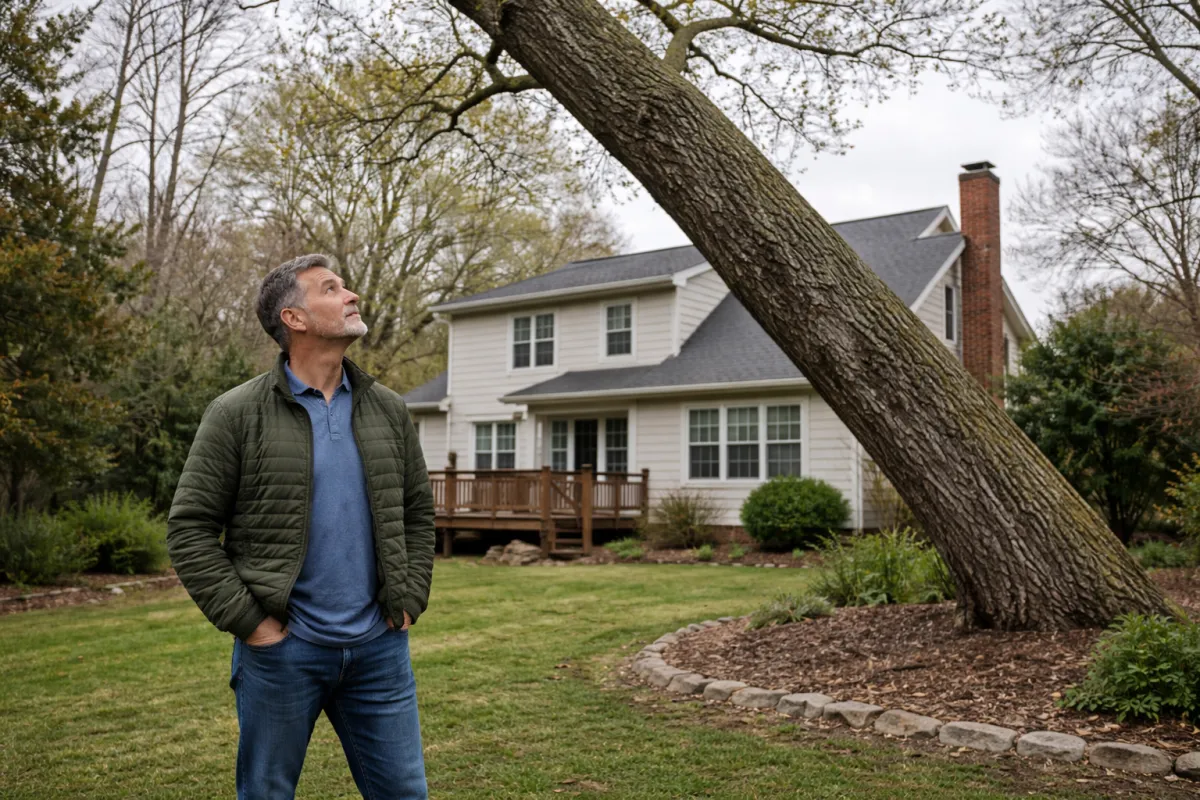
What That Leaning Tree Is Actually Telling You
There's a certain moment a lot of homeowners have — you're walking out to your car one morning, glance over at that big oak in the corner of the yard, and think: has that thing always leaned like that?
Maybe it has. Maybe it hasn't. And that uncertainty is exactly what makes leaning trees one of the more stressful things to deal with as a homeowner.
Here's the truth: not every lean is dangerous. Some trees have grown that way their whole lives and are perfectly stable. Others develop a lean over time that's worth taking seriously. The hard part is knowing the difference — and most people have no way to tell just by looking.
This post walks you through what different types of lean can mean, what warning signs to watch for alongside the lean, and how to know when it's time to get a professional opinion.
First, Know That Not All Lean Is Created Equal
Trees lean for a lot of different reasons, and the reason matters a lot when it comes to risk.
Natural lean from light competition. If a tree has been leaning gradually since it was young — often because it was growing toward available sunlight — that lean is usually built into its structure. The root system has developed to compensate for it. These trees can be very stable despite their angle.
Sudden or progressive lean. If a lean seems to have appeared or gotten noticeably worse — especially after a storm, heavy rain, or a period of saturated ground — that's a different story. A tree that has recently shifted position is one that deserves a closer look.
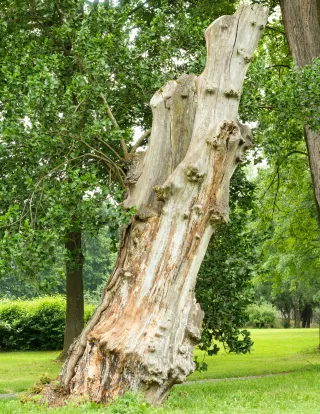
Lean from root or structural problems. Sometimes a tree leans because something has compromised its ability to stay upright — decay in the trunk or root system, root damage from construction or digging, or soil erosion that's reduced the anchor holding it in place. This type of lean is the most concerning.
The Lean Itself Isn't the Whole Story
When I look at a leaning tree, I'm not just looking at the angle. I'm looking at everything around it. The lean is one data point — it's the other signs that tell me whether it's a problem.
Here are things worth paying attention to alongside any lean:
Soil movement or heaving near the base. If the ground around the base of the tree looks raised, cracked, or like it's been pushed up on one side, that's often a sign the root system is starting to lift. That's a significant warning.
Exposed roots on the tension side. Roots pulling out of the ground on the opposite side from the lean can indicate the tree is losing its anchor.
Cracks in the bark or trunk near the base. Vertical cracks or gaps in the wood, especially lower on the trunk, can signal that the tree is under significant stress it may not be able to sustain.
Soft or spongy wood. If you press on the bark near the base and it feels soft or gives way easily, there may be internal decay that's compromising the tree's structural integrity — even if it looks okay from the outside.
Fungal growth at the base. Mushrooms or shelf fungi growing at or near the base of the trunk are often a sign of internal wood rot. A leaning tree with fungal growth is something to take seriously.
Dead or thinning canopy on one side. Uneven dieback in the crown — where one side is noticeably thinner or has more dead branches — can sometimes indicate root issues that are also contributing to an unstable lean.
When a Lean Is Probably Fine
If a tree has leaned at a consistent angle for years without any of the warning signs above, there's a good chance it's simply grown that way and is structurally sound. Plenty of old trees have a noticeable lean and have been perfectly safe for decades.
Young trees sometimes develop a lean after a storm or strong wind, especially if they weren't staked during early growth. In many cases, these can self-correct as the tree matures and strengthens — though that's something worth monitoring over time.
If the lean is modest, there are no cracks or soil heaving, the tree looks healthy, and it hasn't changed noticeably in a short period of time — it's worth keeping an eye on rather than panicking about.
When to Get a Professional Opinion
There are situations where I'd always recommend getting someone out to take a look rather than waiting:
The lean appeared or got noticeably worse after a storm or heavy rain
You're seeing any of the soil movement, cracking, or fungal signs mentioned above
The tree is leaning toward your house, a fence, a vehicle, a structure, or a neighbor's property
The lean is steep — context matters, but a dramatic angle is worth having assessed
You're just not sure, and it's been sitting in the back of your mind
That last one is worth saying plainly: if a tree is bothering you enough that you're reading this article, it's probably worth having someone walk out and look at it. A quick assessment can either give you peace of mind or catch something before it becomes a much bigger problem.
Sometimes it's hard to tell without getting up close — that's not a knock on anyone. Trees can look fine from the yard and have issues that are only visible when you get your hands on them.
I've seen trees that looked solid from 20 feet away that had significant decay once we got closer, and I've seen trees that looked alarming turn out to be completely stable. That's just the nature of it.
What Happens If a Leaning Tree Does Come Down
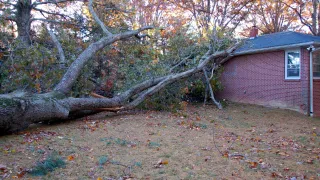
This is the part that most homeowners don't think about until they're in the middle of it. The direction a leaning tree falls in an emergency isn't always predictable — wind, the specific failure point, and the tree's weight distribution all play a role.
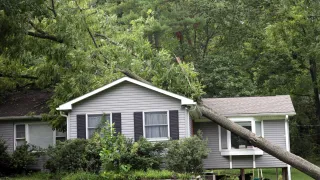
If a tree is leaning toward your home, a structure, or onto your neighbor's property, that's the direction it's most likely to fall if something gives. That proximity is worth factoring into how urgently you treat the situation.
I've been called out plenty of times after a tree has already come down. Those jobs are almost always more complicated, more expensive, and more stressful than they would have been with a little advance action.
A Few Words on DIY Assessment
There's a lot you can observe on your own — the soil movement, visible cracks, fungal growth, changes over time. Paying attention to those things is genuinely useful and helps you have a more informed conversation if you do call someone.
Where I'd encourage caution is in trying to determine structural integrity or root health on your own. Those are the things that require experience and often a closer look than a homeowner can safely get.
There's no shame in having uncertainty about a tree — it takes years of seeing a lot of trees to build that judgment.
If You've Got a Tree You're Not Sure About
Give us a call or shoot us a text. We're happy to come out, take a look, and give you a straight answer about what we see. If it's fine, we'll tell you it's fine. If it's something worth addressing, we'll walk you through your options without pressure.
Reach out anytime at (423) 443-4533 — call or text, whatever's easier.