A Storm Took Down a Limb. Now What?
The Morning After
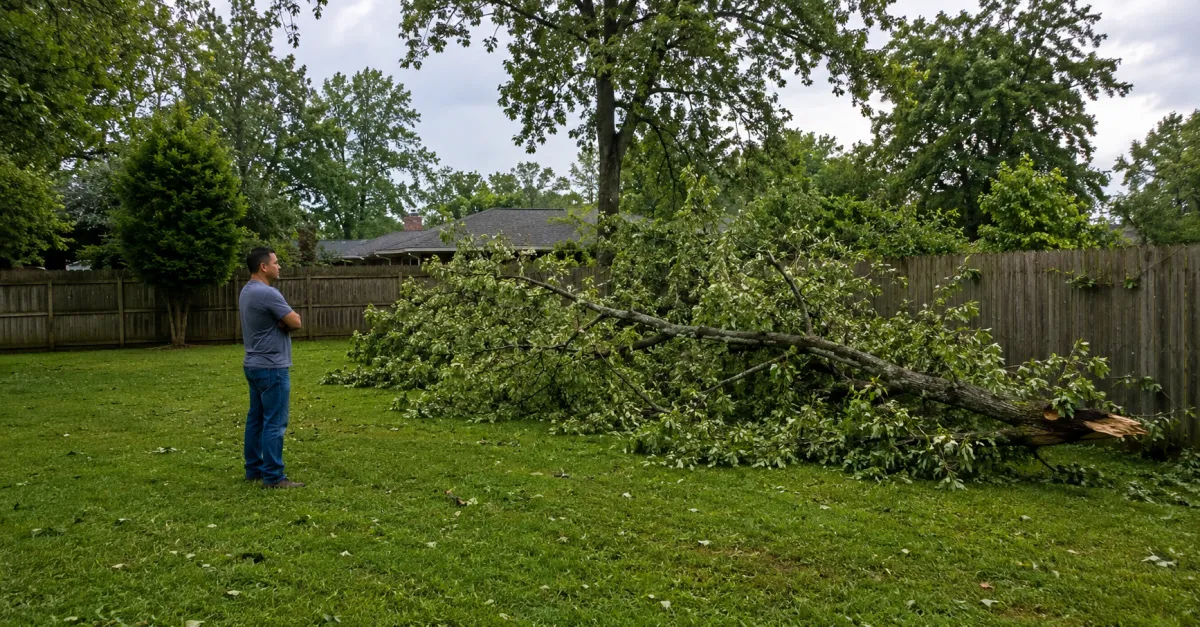
There’s a particular feeling you get when you walk outside after a summer storm and find a big limb down in your yard. Part relief that it didn’t hit anything. Part worry about what it means. Part uncertainty about what you’re actually supposed to do next.
If that’s where you are right now, here’s a calm, practical walkthrough — what to look at, what to leave alone, and when to make a call.
Step One: Don’t Rush In
The first instinct is usually to go deal with it. That’s understandable. But before you get close to any downed limb or damaged tree, take a few minutes to assess from a distance.
Look up. This is important. After a storm, the most dangerous thing in your yard is often not what’s on the ground — it’s what’s still in the tree. Broken branches that are partially attached and hanging overhead are called widow makers for a reason. They can fall without warning, especially as things dry out or a breeze picks up.
Check for utility lines. If a limb came down near power lines, or if a line is down anywhere on your property, stay well back and call your utility company before anything else. This is not a situation for problem-solving on your own.
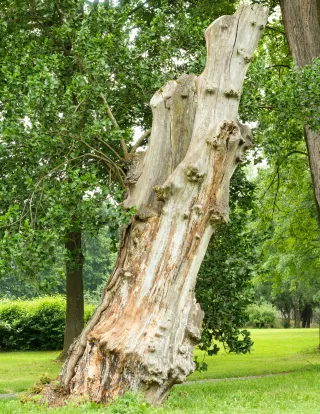
Look at the tree itself. If the remaining tree has a significant crack, a new lean, or a large section of bark torn away, the tree may be more compromised than it appears. Don’t assume the visible damage is the whole story.
What You’re Actually Looking At
Not all storm damage is equal. Here’s a rough way to think about it:
Small limb down, tree otherwise intact — generally manageable. The wound on the tree will likely seal over time if it’s a clean break. You can clean up the debris and monitor the tree going forward.
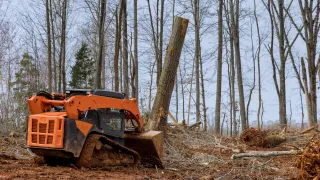
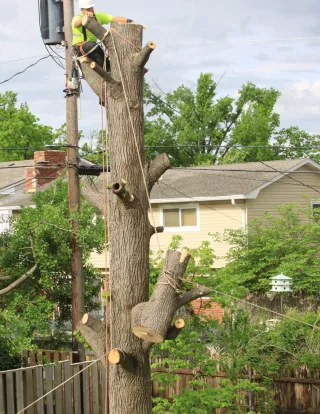
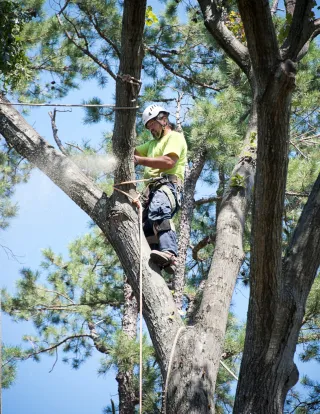
Large limb down (anything you’d need a chainsaw for) — worth calling a professional, particularly if the break point is high in the tree or if there’s hanging material still attached. The rigging and cutting involved in removing a large limb safely is not as straightforward as it looks.
Tree is still standing but has significant damage — cracked main trunk, major branch loss on one side, new visible lean — this needs a professional assessment before you decide what to do. A tree that looks stable after a storm isn’t always stable.
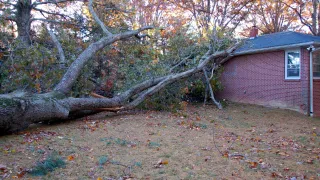
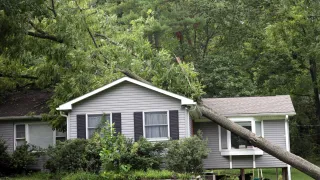
Tree fell or is resting on something — your house, a fence, a vehicle, another tree — don’t attempt to handle this yourself. A tree under that kind of tension can behave unpredictably when cut.
On the Insurance Question
If a limb or tree came down on your home, fence, vehicle, or any structure, document it thoroughly before anything is moved.
Take photos and video from multiple angles. Get close-ups of the point of contact and wide shots showing the full scene. If your insurance adjuster needs to assess the damage, having good documentation from the start makes the process smoother.
Generally speaking: if a tree falls on a structure you own, your homeowner’s insurance handles the structure damage. If a neighbor’s healthy tree falls on your property during a storm, your insurance still covers your property — a healthy tree falling in a storm is typically treated as an act of nature, not negligence. Where it gets more complicated is when a tree was visibly dead, diseased, or leaning before the storm. Tennessee courts have found that a property owner who knew — or should have known — a tree was hazardous may bear responsibility if it causes damage.
This is exactly why staying on top of tree health before storm season matters.
What Not to Do
Don’t chainsaw anything you’re not certain about. Storm-damaged trees are under stress and tension in ways that aren’t always visible. A cut in the wrong place can cause a limb to swing, drop, or spring back. This is one of the more common ways people get hurt during cleanup.
Don’t hire the first person who knocks on your door. After a significant storm, it’s common for unlicensed contractors to come through neighborhoods offering quick, cheap cleanup. Some are fine. Some aren’t. Ask for proof of insurance before anyone starts work on your property.
Don’t wait too long on a hanging limb. If there’s material still suspended in the tree over an area people use — a patio, a driveway, a play area — that needs to be addressed sooner rather than later. Don’t just decide to avoid that part of the yard and hope it comes down on its own.
After Cleanup: Check the Tree
Once the visible debris is handled, spend a few minutes looking at the tree that lost the limb. Look for:
Torn or stripped bark at the wound site — a clean break heals better than a jagged one
Cracks extending down the trunk from the break point
Any new lean that wasn’t there before the storm
Soil disturbance at the base — raised or cracked soil around the root zone can mean roots shifted
A tree can absorb a lot and still recover well. But it’s worth checking, especially before the next round of storms rolls through.
We’re Here If You Need Us
We offer 24/7 storm response, and we’re happy to come take a look even if you’re just not sure what you’re dealing with. Sometimes the answer is reassuring. Sometimes there’s more to address. Either way, it helps to know.
Call or text (423) 443-4533 — no pressure, just honest information.