Why Spring Is the Worst Time to Ignore Your Trees
Spring is one of those seasons that makes everything look okay.
The yard greens up, the trees fill back in with leaves, and all that bare-branch worry from winter starts to fade. It's easy to look out at a full canopy in April and think: the trees are fine. They made it through winter. We're good.
But here's the thing — spring isn't a clean bill of health. It's actually one of the highest-risk windows of the year for tree problems, and it's also the season when those problems are hardest to see. The same new growth that makes everything look healthy can mask serious issues that are quietly getting worse underneath.
This isn't a scare piece. Most trees really are fine. But if you've been meaning to take a closer look at the trees on your property and keep putting it off, spring is the wrong time to keep waiting.
Here's why.
Saturated Soil Is More Dangerous Than It Looks
Chattanooga's spring means rain — sometimes a lot of it, and sometimes in a short period of time. That moisture is good for growth, but it creates a real structural problem for trees.
When the ground gets saturated, it loses its grip. The soil that normally holds a tree's root system in place becomes soft and loose, and the friction that keeps roots anchored decreases significantly. Chattanooga's own urban forester has noted that heavy rainfall reduces the surface tension between roots and the soil — and that the problem is actually more common in spring than in summer, because summer heat causes moisture to evaporate quickly while spring soil stays wet longer.
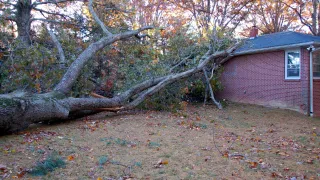
The result: trees that looked perfectly stable all winter can become a lot less stable when the ground is soaked and a spring storm rolls through with strong winds. A tree that would have held up fine in dry conditions may not hold up the same way when its roots are sitting in saturated clay.
You don't have to be a tree expert to notice the early signs. Soil heaving or cracking near the base of a tree, a lean that wasn't there before, or exposed roots that seem to be lifting — those are things worth paying attention to, especially after a stretch of heavy rain.
New Leaves Hide What Winter Left Behind
Winter is actually the best time to assess a tree's structure, because bare branches don't lie. You can see the architecture clearly — where there's deadwood, where there are cracks, where a branch union looks weak.
Come spring, all of that gets covered up.
The leaves come in, the tree looks full and green, and the structural problems that were visible in February are now hidden inside a canopy. But they're still there. A dead branch that was obvious in January is still dead in May — it's just harder to see. And it hasn't gotten any more attached to the tree in the meantime.
This matters because spring storms hit harder than most people expect. When you combine strong winds with a full, leafy canopy — which acts like a sail — the force on a tree's branches and structure is significantly higher than it is on a bare tree in winter. Weak branch unions, deadwood, and cracks that might have held through a calm winter can fail under that kind of load.
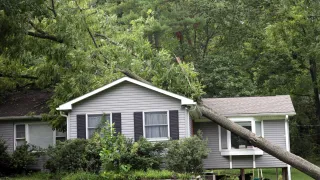
Spring storms in our area aren't gentle. They come with wind, sometimes hail, and the kind of rain that tests everything. If there are problems in your trees, that's when they show up — usually faster and with more damage than you'd expect.
Pests and Disease Are Waking Up Too
It's not just structural risk in spring. It's also the season when the things that weaken trees from the inside start becoming active again.
Fungal diseases that overwintered in dead leaves or bark begin to spread as temperatures warm and humidity rises. Insects that were dormant through winter — including wood-boring beetles that can do serious structural damage — become active in spring. Emerald ash borers, which have been documented in the Chattanooga area, emerge as adults in late spring and early summer after spending the winter as larvae feeding inside ash trees.
The challenge with most pest and disease issues is that the damage happens before you see the symptoms. A tree that looks fine in March may show significant decline by June or July — and by then, what might have been a manageable situation earlier in the season has become more serious.
Spring is the right time to look closely — at the bark, the branch tips, the leaf-out pattern. Trees that are slow to leaf out, or that leaf out unevenly, or that have sections of canopy that never fill in — those are signals worth investigating before the summer growing season is underway.
Trees Don't Announce Problems in Advance
This is probably the most important thing to understand about tree risk, and it applies any time of year: trees don't give a lot of warning.
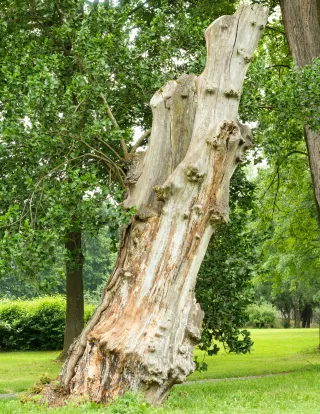
A tree can look healthy and full right up until it fails. The internal decay that makes a tree structurally dangerous often isn't visible from the outside at all — or the signs are subtle enough that most homeowners don't know what to look for. Soft spots at the base, fungal growth, changes in bark texture, a subtle lean — none of these announce themselves loudly. They're easy to walk past every day without registering.
Spring is worth a slow walk around your property specifically looking at your trees. Not because something is probably wrong — most of the time, things really are fine. But because the window between "this looks okay" and "this became an emergency" can be short, and spring storms have a way of accelerating that timeline.
If something catches your eye — a branch that looks different, a spot on the bark you haven't noticed before, a lean that seems new — it costs nothing to have someone look at it.
What to Actually Look For
You don't need any special training to do a basic walk-around assessment. Here's what to pay attention to:
Dead or hanging branches — especially anything large, or anything positioned over the house, driveway, or areas where people spend time
Cracks or splits in the trunk or at major branch unions
Fungal growth at the base of the trunk or on roots — mushrooms and conks are often a sign of internal decay
Soft or spongy bark — healthy bark should feel firm
Leaning that seems recent, especially combined with cracking or heaving soil at the base
Uneven leafing — areas of the canopy that leaf out late, look thin, or don't fill in the same as the rest of the tree
Insect activity — small holes in bark, sawdust-like frass at the base, or galleries visible in damaged bark
None of these are automatic emergencies. But any of them are good reasons to get a closer look before storm season is fully underway.
A Good Time to Check In
If it's been a while since you've really looked at the trees on your property — or if something has been bothering you and you've been putting off getting an opinion — spring is the right time to stop waiting.
I'm happy to take a look and give you a straight answer about what you're dealing with. Sometimes it's nothing. Sometimes it's something worth addressing before the next storm. Either way, you'll know where you stand.
Call or text (423) 443-4533 to set something up. No pressure — just a conversation about what's actually going on with your trees.
Spring is a beautiful time of year in Chattanooga. It's also the time of year when a little attention to your trees can prevent a lot of problems later.