Winter Tree Trimming: Why It's the Best Time (Despite What You'd Think
Most people assume tree trimming should happen in spring or summer when trees are actively growing and look their best. But winter is actually the optimal time for most tree pruning, and I do more quality tree work between December and February than during any other season. The benefits go beyond just convenience – winter pruning is better for tree health, easier to do well, and often less expensive.
Understanding why winter works better can help you plan tree maintenance for optimal results and timing.
Why Trees Prefer Winter Pruning
Trees are dormant in winter, which means they're not actively growing or moving energy and nutrients through their systems. Pruning during dormancy minimizes stress because trees aren't trying to support active growth while healing from cuts.
Reduced bleeding – many species bleed sap heavily if pruned during growing season. Winter pruning eliminates this stress and mess, and allows trees to heal wounds without losing valuable nutrients.
Disease transmission is lower because most tree diseases are less active in cold weather. Pruning cuts made in winter are less likely to become infected than cuts made during warm, humid growing season.
Energy storage isn't disrupted by winter pruning. Trees store energy in their roots during dormancy, and pruning doesn't interfere with this important process the way growing season pruning can.
Visibility Advantages
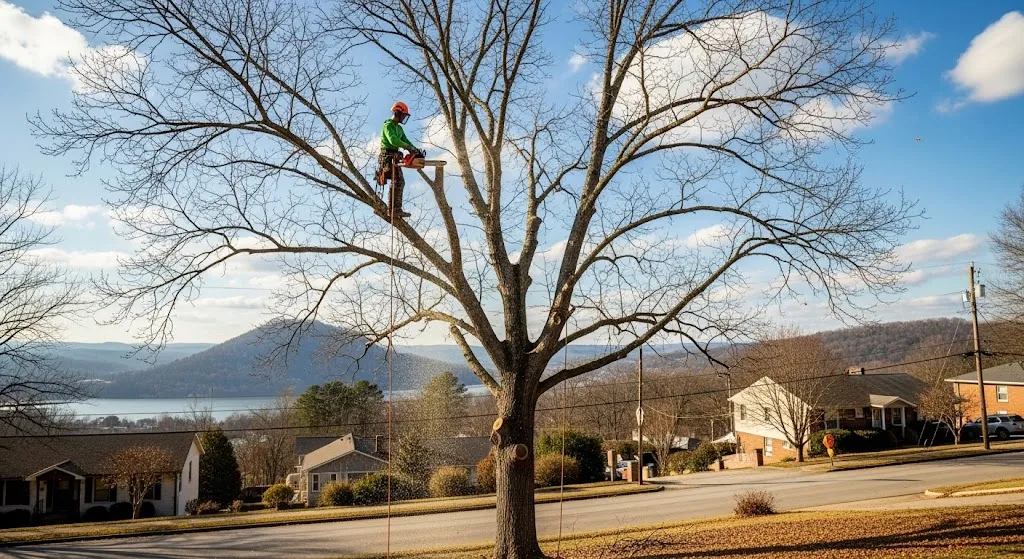
You can see what you're doing when trees are bare. Branch structure, dead wood, and structural problems are obvious without leaves hiding the issues. This leads to much better pruning decisions and results.
Hazards are apparent – dead branches, weak attachments, and structural problems that might be hidden by summer foliage are clearly visible and can be addressed properly.
Overall tree form is visible, allowing for better decisions about shaping and structural pruning. You can see how cuts will affect the tree's appearance and balance.
Precision work is possible when you can see exactly what you're cutting and how it relates to the overall tree structure.
Practical Benefits
Weather is more predictable in winter – you're less likely to have work interrupted by sudden storms or extreme heat that makes tree work dangerous.
Equipment access is easier when grass is dormant and ground conditions are typically more stable. Heavy equipment won't damage actively growing grass the way it would during growing season.
Cleanup is simpler without leaves to deal with. Wood chips and branches are easier to handle than mixed debris with leaves and seasonal growth.
Crew efficiency – cooler weather allows crews to work longer and more comfortably, often resulting in more careful, thorough work.
Cost Advantages
Lower demand during winter months often translates to better pricing and more flexible scheduling for tree pruning work.
Less competition for tree services means you can often get better quality work from crews that aren't rushed or overbooked.
Bundling opportunities – winter is a good time to address multiple trees or combine pruning with other tree maintenance for better overall pricing.
Avoiding peak season premiums – spring and summer tree work often costs more due to higher demand and more difficult working conditions.
Species-Specific Winter Pruning Benefits
Oak trees should ideally be pruned in winter to avoid oak wilt disease, which is transmitted by beetles active during growing season. Winter pruning eliminates this risk.
Maples benefit from winter pruning because they bleed heavily if pruned during spring sap flow. Winter cuts heal cleanly without sap loss.
Fruit trees are traditionally pruned in winter to promote healthy spring growth and fruit production. Winter pruning stimulates vigorous spring growth.
Most shade trees respond better to structural pruning done during dormancy when energy reserves aren't being used for active growth.
What Winter Pruning Accomplishes
Structural improvement – winter is the ideal time for corrective pruning of young trees to establish good form and prevent future problems.
Hazard removal – dead, diseased, and damaged wood should be removed before spring growth begins and before storm season tests weak branches.
Crown cleaning – removing deadwood, water sprouts, and crossing branches is most effective when tree structure is clearly visible.
Size management – reducing tree size or managing growth is best done during dormancy when trees can respond with controlled spring growth.
What NOT to Do in Winter
Don't prune trees that bloom early (like maples and some fruit trees) too late in winter if you want spring flowers – flower buds may already be formed.
Avoid pruning during extreme cold when wood is brittle and tools don't work properly. Work during moderate winter temperatures for best results.
Don't do major pruning on recently planted trees that are still establishing – they need their energy reserves for root development.
Skip winter pruning on tropical species or trees that aren't fully cold-hardy in your area.
Timing Within Winter
Early winter (December-January) is ideal for most deciduous trees once they're fully dormant.
Mid-winter (January-February) is optimal for most structural pruning when trees are in deep dormancy.
Late winter (February-March) is good for final cleanup before spring growth begins, but avoid pruning too close to bud break.
Species timing varies – some trees enter and leave dormancy earlier or later than others, so timing should be adjusted accordingly.
Professional vs. DIY Winter Pruning
Professional work is especially valuable in winter because proper pruning requires understanding tree biology and structure that's most apparent when trees are bare.
Complex structural problems are best addressed by experienced arborists who can make pruning decisions based on long-term tree health and safety.
Large tree work in winter requires specialized equipment and safety expertise, especially when working conditions include cold weather challenges.
Homeowner pruning can handle small deadwood removal and light maintenance, but major structural work should be left to professionals.
Planning Winter Pruning Projects
Assessment first – winter is the best time to assess what trees actually need because you can see structure clearly.
Prioritize safety hazards – dead branches and structural problems that could cause damage should be addressed first.
Plan for spring growth response – understand that winter pruning will stimulate vigorous spring growth, so prune accordingly.
Budget for quality work – winter is the time to invest in proper structural pruning that will benefit trees for years.
Post-Pruning Care
No fertilization needed after winter pruning – trees will use stored energy for spring growth response.
Monitor spring response – pruned trees often produce vigorous spring growth that may need management.
Mulching helps trees direct energy toward healing and growth rather than dealing with environmental stress.
Watering may be needed in spring if weather is dry and trees are putting energy into growth response from winter pruning.
Long-Term Benefits
Better tree structure results from winter pruning because cuts are made when tree architecture is clearly visible.
Reduced maintenance needs – proper winter structural pruning reduces the need for corrective work later.
Improved safety – addressing structural problems during winter prevents many issues that could become hazardous.
Enhanced tree health – removing dead, diseased, and problematic wood during dormancy promotes overall tree health.
Common Winter Pruning Misconceptions
"Trees need their leaves to recover" – actually, trees heal better during dormancy when energy isn't being used for active growth.
"Winter pruning will shock the tree" – dormant trees handle pruning stress much better than actively growing trees.
"Spring pruning promotes better growth" – winter pruning actually promotes more controlled, healthy spring growth.
"Winter work costs more" – winter tree work often costs less due to lower demand and better working conditions.
Coordinating with Other Tree Care
Winter pruning combines well with other dormant season tree maintenance like fertilization, mulching, and disease prevention treatments.
Planning for spring – winter pruning prepares trees for spring growth and can be coordinated with spring planting and landscape work.
Multi-year programs – winter is an excellent time for long-term tree care planning and implementing comprehensive maintenance strategies.
The Bottom Line
Winter is the optimal time for most tree pruning because of benefits to tree health, work quality, visibility, and often cost. Trees prefer winter pruning, and the results are typically better than work done during growing season.
Professional winter pruning takes advantage of optimal conditions to do structural work that benefits trees for years to come.
Planning tree pruning for winter allows you to take advantage of better scheduling, pricing, and working conditions while providing better results for tree health and appearance.
If you've been putting off tree pruning, or if you want to plan winter pruning for optimal results, give us a call or text at (423) 443-4533. Winter is the perfect time to invest in professional tree care that will benefit your trees and property for years to come.