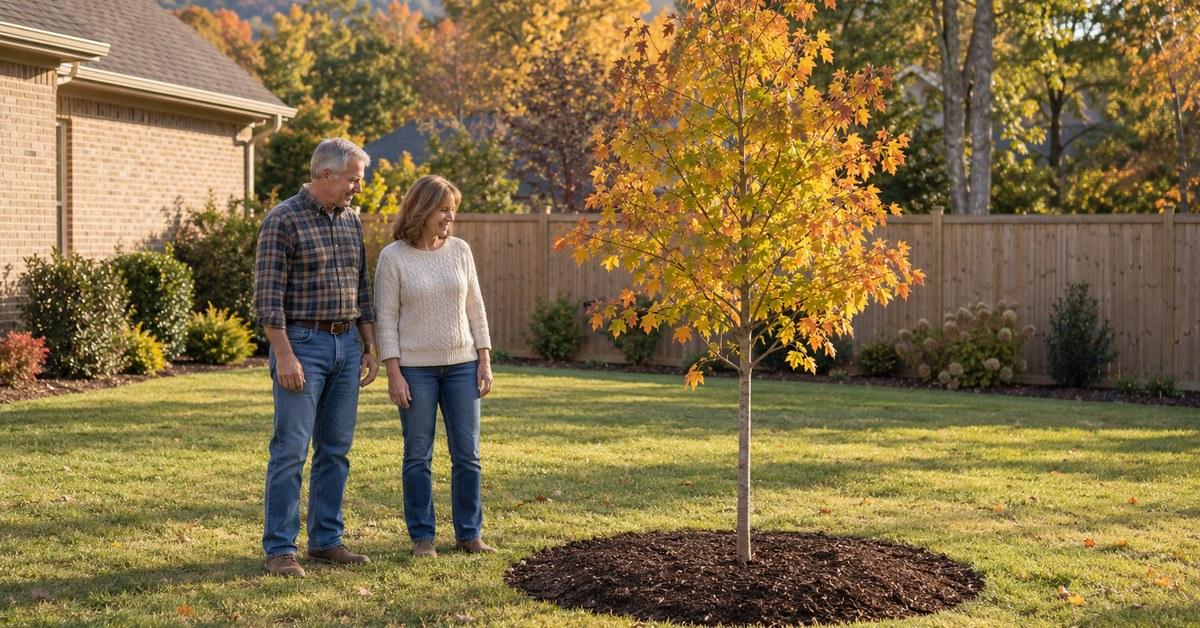
Fall Is Planting Season: Getting a New Tree Off to a Good Start
There's a spot in the yard where a tree used to be, and you notice it every time you pull into the drive. Or there's a bare corner you've been meaning to do something about for a few years now. Either way, the plan has probably been the same: wait for spring, when the garden centers fill up and planting feels like the natural thing to do.
Around here, fall is often the better choice. University of Tennessee Extension and UGA Extension both point to fall as the time to plant. Fall tree planting gives the roots a head start, and the roots decide whether a young tree makes it through its first summer.
Here's why fall works, and the handful of things that make the difference once the tree is in the ground.
Why Fall Beats Spring for a New Tree
A tree planted in spring has two jobs at once. It has to push out a full set of leaves. It also has to grow roots into soil it has never been in. Then July shows up, and a young root system has to keep a whole canopy going through the heat.
A tree planted in fall skips that squeeze. The leaves are about done for the year, but the ground holds its warmth long after the air cools off.
University of Tennessee Extension puts it plainly: "fall may be the best time to plant." Their planting guide notes that roots keep growing until the soil drops below about 45 to 50 degrees. UGA Extension's guide to shade trees for Georgia says the same from the other side of the state line. A dormant tree keeps growing roots through the winter, even when nothing seems to be happening above ground.
That's the payoff of fall tree planting. The tree starts next spring with work already done underground. UT adds that it won't need as much watering the next summer as a tree that went in during spring.
For a tree grown in a container, UGA's guide names early to late fall as the best time to plant. For one sold with its roots wrapped in burlap, it's late fall. Mid-October is right in the container window. For a burlapped tree, the best time is still a few weeks off, so there's no rush either way.
Pick the Tree for the Spot It Will Grow Into
Picture the tree at full size, not the size it is in the pot. A few things are worth a look before anything gets dug:
- Overhead. Power lines, the service line to the house, and the edge of the roof.
- Out to the sides. The driveway, the fence, and how close the house will feel once the tree fills out.
- The light. How much sun the spot gets through the day.
A cute little tree planted three steps from the house can turn into a limb over the roof someday. It's a lot easier to move it now, on paper, than later with a saw.
If you're still choosing what to plant, our post on native trees worth planting in Chattanooga is a good place to start.
Set the Top of the Root Ball Level With the Ground
Dig wide, not deep. A hole two to three times as wide as the root ball gives the roots loose soil to grow out into.
The depth is the part that's easy to get wrong. The hole doesn't need to be any deeper than the root ball, and the top of the root ball should sit level with the ground. Roots still need air, even underground. A firm base at the bottom of the hole keeps the tree from settling deeper after it's planted.
On a tree, the spot to look for is the root flare. That's where the trunk widens out at the bottom into the roots. It should sit at the surface, where you can see it. If the trunk goes straight into the soil like a fence post, the flare is probably buried.
A Mulch Ring, Not a Mulch Volcano
You've seen the mulch volcano. It's a tall cone of mulch piled up against the trunk, and it shows up in parking lots everywhere.
What a young tree wants is a ring. Spread the mulch out wide and fairly flat, and pull it back from the trunk so the bark at the base stays dry and in the open. Think of a doughnut, not a mountain. Our fall mulching guide covers it in more detail.
The ring keeps the soil from drying out as fast and evens out the temperature around the roots. It also keeps the mower and the string trimmer back from the trunk. A University of Georgia article calls the damage they do "lawn mower blight," and says a lot of trees and shrubs meet their end that way.
The volcano does the opposite of what it's meant to. Mulch packed against the bark keeps it damp, and too much of it against a tree invites insect and disease problems.
Keep Watering After the Weather Cools Off
Cool weather can fool you. The tree looks fine, the leaves have dropped, and watering feels like a summer job.
UT Extension calls watering at planting time "extremely important" in fall. Their guide notes that October and November are usually very dry months, with little rain.
Water the tree in well when it goes in, so the soil settles around the roots. From there, the first year is all about roots. Check the soil around the root ball with your hand instead of going by the calendar. How much water a tree needs depends on the tree, the soil, and the weather. Dry soil is the thing to watch for.
Having a New Tree Planted for You
Some people enjoy planting a tree themselves, and fall is a fine time to do it.
If you'd rather hand it off, we plant trees and shrubs, either where you want them or where David suggests. Maybe you've already picked out the tree. Tell us what you've got, and we'll plant it. If you're not sure what would do well in that spot, David can walk the yard with you and talk it through.
If the old tree left a stump right where you'd want the new one, mention that when you call. We grind stumps too, and we can look at the stump and the spot on the same visit.
You'll get a price before any work starts, and you decide from there.
Estimates are free. Call or text (423) 443-4533, or request a quote online.
Sources